
Society
Main Category
Sub Category
Era
Date Created
Location Country
US
Coordinates
43.07390262391, -89.4109012964
Address1
420 Henry Mall
City
Madison
State
Country
Zip
Creator
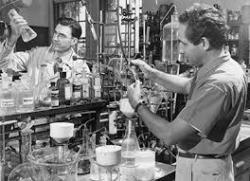
University of Wisconsin-Madison biochemist Karl Paul Link and his lab isolated an anticoagulant compound from spoiled sweet clover hay in 1939, after a Wisconsin farmer's cattle began hemorrhaging from the moldy feed. Their research led to warfarin, marketed first as a rat poison in 1948 and later approved as the blood-thinning drug warfarin sodium (Coumadin) in 1954. It remains one of the world's most widely prescribed anticoagulants.
Thumb
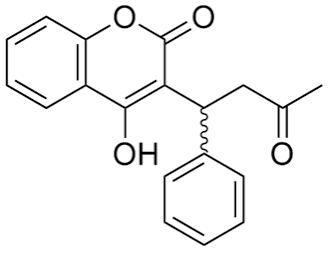
Image Credit
The University of Wisconsin Collection, The American Chemical Society
Image Caption
Mark A. Stahmann (left) and Karl Paul Link discovered dicumarol, a powerful anticoagulant. They are shown in 1940 in a UW-Madison biochemistry laboratory.
Courtesy of The University of Wisconsin Collection
Courtesy of The University of Wisconsin Collection