
Main Category
Sub Category
Era
Date Created
Location Country
US
Coordinates
40.612462519467, -74.267135250927
Address1
126 E Lincoln Ave
City
Rahway
State
Country
Zip
Creator
In the 1970s, microbiologist Satoshi Ōmura at Japan's Kitasato Institute isolated a soil bacterium that produced compounds effective against parasitic worms. Working under a partnership with Merck, parasitologist William C. Campbell's team refined these compounds into ivermectin, a veterinary treatment approved in 1981 and later adapted into Mectizan, approved for human use in 1987 to treat river blindness. Merck committed to donating Mectizan indefinitely to combat the disease, and Ōmura and Campbell shared the 2015 Nobel Prize in Physiology or Medicine for the discovery.
Thumb
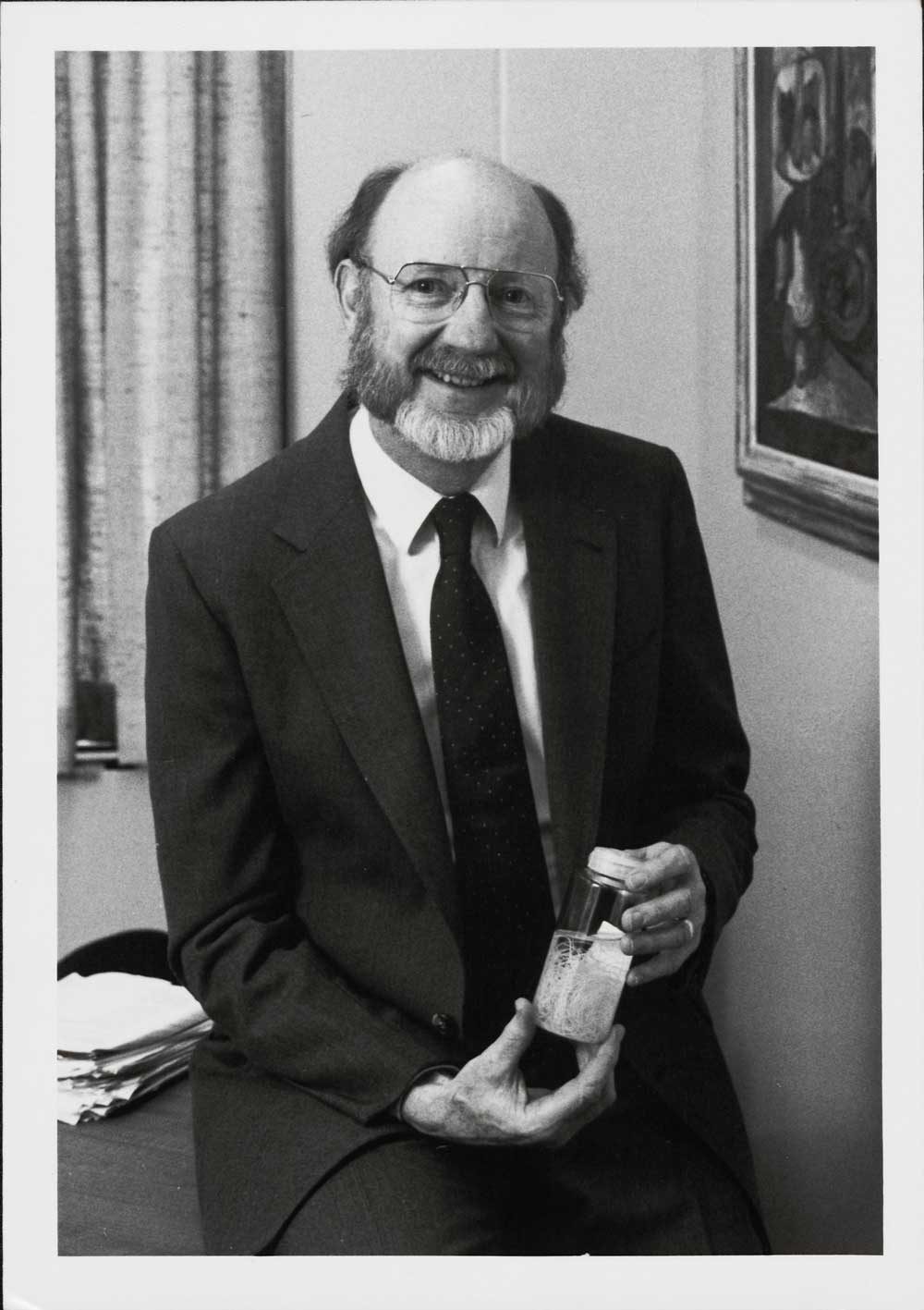
Image Credit
Courtesy of Merck & Co., Inc., and The American Chemical Society
Image Caption
William C. Campbell, shown here, shared the 2015 Nobel Prize in Physiology or Medicine with his collaborator on ivermectin, Satoshi Ōmura, and Tu Youyou, who discovered a treatment for malaria.