

In the 1970s, microbiologist Satoshi Ōmura at Japan's Kitasato Institute isolated a soil bacterium that produced compounds effective against parasitic worms. Working under a partnership with Merck, parasitologist William C. Campbell's team refined these compounds into ivermectin, a veterinary treatment approved in 1981 and later adapted into Mectizan, approved for human use in 1987 to treat river blindness. Merck committed to donating Mectizan indefinitely to combat the disease, and Ōmura and Campbell shared the 2015 Nobel Prize in Physiology or Medicine for the discovery.
2016
Main Category: ChemicalSub Category: MedicalEra: 1980-1989DateCreated: 1887126 E Lincoln AveRahwayState: NJZip: 07065Country: USAWebsite: https://www.acs.org/education/whatischemistry/landmarks/ivermectin-mectizan.htmlCreator: Ōmura, Satoshi , Campbell, William C.
YearAdded:
Image Credit: Courtesy of Merck & Co., Inc., and The American Chemical SocietyImage Caption: William C. Campbell, shown here, shared the 2015 Nobel Prize in Physiology or Medicine with his collaborator on ivermectin, Satoshi Ōmura, and Tu Youyou, who discovered a treatment for malaria.
2016
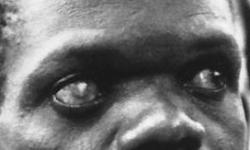
The story is so improbable it defies belief: a soil sample from Japan stops suffering in Africa. It starts when a scientist discovers a lowly bacterium near a golf course outside Tokyo. A team of scientists in the United States finds that the bacterium produces compounds that impede the activity of nematode worms. It is developed into a drug that wards off parasites in countless pets and farm animals, averting billions of dollars in losses worldwide.
YearAdded:
Image Credit: Courtesy Wikicommons/현태웅 (CC BY-SA 4.0)Image Caption: A young man affected by onchocerciasis - river blindness
2016
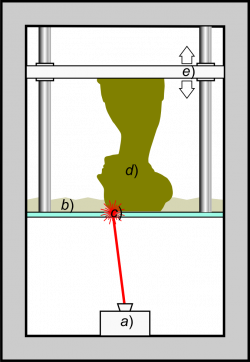
Although the origins of three-dimensional printing date back to the mid 19th century, and the first patent application for rapid prototyping technology was filed by Dr.
YearAdded:
Image Credit: Scopigno R., Cignoni P., Pietroni N., Callieri M., Dellepiane M. (2017). "Digital Fabrication Techniques for Cultural Heritage: A Survey". Computer Graphics Forum 36 (1): 6–21. DOI:10.1111/cgf.12781.Image Caption: Schematic representation of Stereolithography. A light-emitting device a) (a laser or DLP) selectively illuminates the transparent bottom c) of a tank b) filled with a liquid photo-polymerizing resin. The solidified resin d) is progressively dragged up by a lifting platform e)
2016

The Rainhill Trials were an important competition in the early d
YearAdded:
Image Credit: Public DomainImage Caption: Rolling stock on the Liverpool and Manchester Railway, 1831
2016
Innovations

Although the origins of three-dimensional printing date back to the mid 19th century, and the first…
Read More
The story is so improbable it defies belief: a soil sample from Japan stops suffering in Africa. It starts when a scientist discovers a lowly bacterium near a golf course outside Tokyo. A team of scientists in the United States finds that the bacterium produces compounds that impede the activity…
Read MoreIn the 1970s, microbiologist Satoshi Ōmura at Japan's Kitasato Institute isolated a soil bacterium that produced compounds effective against parasitic worms. Working under a partnership with Merck, parasitologist William C. Campbell's team refined these compounds into ivermectin, a veterinary…
Read More