
In the 1970s, microbiologist Satoshi Ōmura at Japan's Kitasato Institute isolated a soil bacterium that produced compounds effective against parasitic worms. Working under a partnership with Merck, parasitologist William C. Campbell's team refined these compounds into ivermectin, a veterinary treatment approved in 1981 and later adapted into Mectizan, approved for human use in 1987 to treat river blindness. Merck committed to donating Mectizan indefinitely to combat the disease, and Ōmura and Campbell shared the 2015 Nobel Prize in Physiology or Medicine for the discovery.
Biomedical Research
Main Category: ChemicalSub Category: MedicalEra: 1980-1989DateCreated: 1887126 E Lincoln AveRahwayState: NJZip: 07065Country: USAWebsite: https://www.acs.org/education/whatischemistry/landmarks/ivermectin-mectizan.htmlCreator: Ōmura, Satoshi , Campbell, William C.
YearAdded:
Image Credit: Courtesy of Merck & Co., Inc., and The American Chemical SocietyImage Caption: William C. Campbell, shown here, shared the 2015 Nobel Prize in Physiology or Medicine with his collaborator on ivermectin, Satoshi Ōmura, and Tu Youyou, who discovered a treatment for malaria.
2016
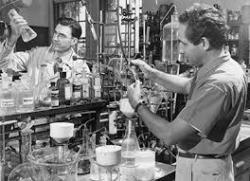
University of Wisconsin-Madison biochemist Karl Paul Link and his lab isolated an anticoagulant compound from spoiled sweet clover hay in 1939, after a Wisconsin farmer's cattle began hemorrhaging from the moldy feed. Their research led to warfarin, marketed first as a rat poison in 1948 and later approved as the blood-thinning drug warfarin sodium (Coumadin) in 1954. It remains one of the world's most widely prescribed anticoagulants.
YearAdded:
Image Credit: The University of Wisconsin Collection, The American Chemical SocietyImage Caption: Mark A. Stahmann (left) and Karl Paul Link discovered dicumarol, a powerful anticoagulant. They are shown in 1940 in a UW-Madison biochemistry laboratory.2022
Courtesy of The University of Wisconsin Collection
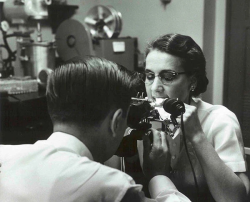
Trials of the new product were launched in the 1950s at Indiana University (IU), in Bloomington. There, a dentist instructed children to brush their teeth — in whichever way they normally did — with a new kind of paste. After six months, the kids came back for a checkup. These local children were not just dental patients, they were participants in one of the biggest clinical trials ever run on toothpaste. The main investigator in this endeavor was Dr. Joseph Muhler, a dentist and assistant professor in the university’s chemistry department.
YearAdded:
Image Credit: Procter & GambleImage Caption: A technician checks Crest’s tooth cleaning ability using a microscope and ultraviolet light.
2024
CincinnatiState: OHZip: 45267Country: USAWebsite: https://www.acs.org/education/whatischemistry/landmarks/benadryl.htmlCreator: Rieveschl, George
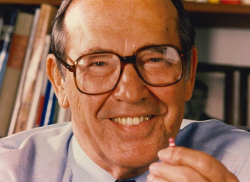
The antihistamine Benadryl has provided temporary relief from allergy symptoms for millions of people since it was developed by George Rieveschl at a University of Cincinnati laboratory in the early 1940s and later approved by the U.S. Food and Drug Administration (FDA). Rieveschl was originally studying muscle relaxants when he discovered the compound diphenhydramine hydrochloride. He sold it under the name ‘Benadryl,’ among others.
YearAdded:
Image Credit: George Rieveschl, Jr. Papers of The Lloyd Library & MuseumImage Caption: Rieveschl holding a Benadryl capsule, the medication that has provided allergy relief to millions worldwide.
2025

For more than a century, scientists at Rockefeller University have enhanced our understanding of the molecular basis of life — specifically the relationship between the structure and function of nucleic acids and proteins. They showed that DNA transfers genetic information and that the sugars ribose and deoxyribose are the key building blocks of the nucleic acids RNA and DNA.
YearAdded:
Image Credit: Courtesy Flickr/S Shepherd (CC BY 2.0)Image Caption: Nucleic Acid and Protein Chemistry Research at Rockefeller UniversityEra_date_from: 1901
2000
Innovations

For more than a century, scientists at Rockefeller University have enhanced our understanding of the molecular basis of life — specifically the relationship between the structure and function of nucleic acids and proteins. They showed that DNA transfers genetic information and that the sugars…
Read More
The antihistamine Benadryl has provided temporary relief from allergy symptoms for millions of people since it was developed by George Rieveschl at a University of Cincinnati laboratory in the early 1940s and later approved by the U.S. Food and Drug Administration (FDA). Rieveschl was originally…
Read More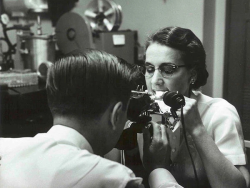
Trials of the new product were launched in the 1950s at Indiana University (IU), in Bloomington. There, a dentist instructed children to brush their teeth — in whichever way they normally did — with a new kind of paste. After six months, the kids came back for a checkup. These local children…
Read More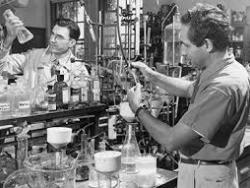
University of Wisconsin-Madison biochemist Karl Paul Link and his lab isolated an anticoagulant compound from spoiled sweet clover hay in 1939, after a Wisconsin farmer's cattle began hemorrhaging from the moldy feed. Their research led to warfarin, marketed first as a rat poison in 1948 and…
Read MoreIn the 1970s, microbiologist Satoshi Ōmura at Japan's Kitasato Institute isolated a soil bacterium that produced compounds effective against parasitic worms. Working under a partnership with Merck, parasitologist William C. Campbell's team refined these compounds into ivermectin, a veterinary…
Read More