
In the 1970s, microbiologist Satoshi Ōmura at Japan's Kitasato Institute isolated a soil bacterium that produced compounds effective against parasitic worms. Working under a partnership with Merck, parasitologist William C. Campbell's team refined these compounds into ivermectin, a veterinary treatment approved in 1981 and later adapted into Mectizan, approved for human use in 1987 to treat river blindness. Merck committed to donating Mectizan indefinitely to combat the disease, and Ōmura and Campbell shared the 2015 Nobel Prize in Physiology or Medicine for the discovery.
Medicine
Main Category: ChemicalSub Category: MedicalEra: 1980-1989DateCreated: 1887126 E Lincoln AveRahwayState: NJZip: 07065Country: USAWebsite: https://www.acs.org/education/whatischemistry/landmarks/ivermectin-mectizan.htmlCreator: Ōmura, Satoshi , Campbell, William C.
YearAdded:
Image Credit: Courtesy of Merck & Co., Inc., and The American Chemical SocietyImage Caption: William C. Campbell, shown here, shared the 2015 Nobel Prize in Physiology or Medicine with his collaborator on ivermectin, Satoshi Ōmura, and Tu Youyou, who discovered a treatment for malaria.
2016
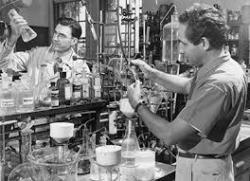
University of Wisconsin-Madison biochemist Karl Paul Link and his lab isolated an anticoagulant compound from spoiled sweet clover hay in 1939, after a Wisconsin farmer's cattle began hemorrhaging from the moldy feed. Their research led to warfarin, marketed first as a rat poison in 1948 and later approved as the blood-thinning drug warfarin sodium (Coumadin) in 1954. It remains one of the world's most widely prescribed anticoagulants.
YearAdded:
Image Credit: The University of Wisconsin Collection, The American Chemical SocietyImage Caption: Mark A. Stahmann (left) and Karl Paul Link discovered dicumarol, a powerful anticoagulant. They are shown in 1940 in a UW-Madison biochemistry laboratory.2022
Courtesy of The University of Wisconsin Collection
CincinnatiState: OHZip: 45267Country: USAWebsite: https://www.acs.org/education/whatischemistry/landmarks/benadryl.htmlCreator: Rieveschl, George
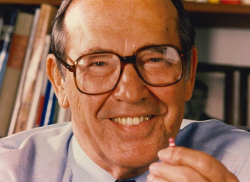
The antihistamine Benadryl has provided temporary relief from allergy symptoms for millions of people since it was developed by George Rieveschl at a University of Cincinnati laboratory in the early 1940s and later approved by the U.S. Food and Drug Administration (FDA). Rieveschl was originally studying muscle relaxants when he discovered the compound diphenhydramine hydrochloride. He sold it under the name ‘Benadryl,’ among others.
YearAdded:
Image Credit: George Rieveschl, Jr. Papers of The Lloyd Library & MuseumImage Caption: Rieveschl holding a Benadryl capsule, the medication that has provided allergy relief to millions worldwide.
2025
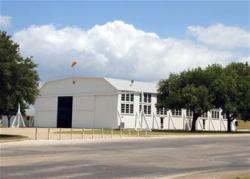
In its infancy, Hangar Nine housed Curtiss JN-4s ("Jennys") like the one Charles Lindbergh landed there when he reported for duty as a flying cadet in 1924.
As the U.S. was preparing to enter World War I, the Army raced to build an entire airfield, complete with 16 wooden hangars, successfully completing it in less than a year. The last remaining World War I facility of its kind, Hangar Nine at Brooks Air Force Base represents the emergence of fast-track construction methods using available materials and the skills of a local workforce.
YearAdded:
Image Credit: Public Domain (U.S. Air Force)Image Caption: Brooks AFB, Old Hangar 9Era_date_from: 1918
1998
Innovations
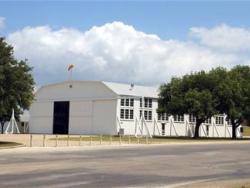
In its infancy, Hangar Nine housed Curtiss JN-4s ("Jennys") like the one Charles Lindbergh landed there when he reported for duty as a flying cadet in 1924.
As the U.S. was preparing to enter World War I, the Army raced to build an entire airfield, complete with 16 wooden hangars,…
Read More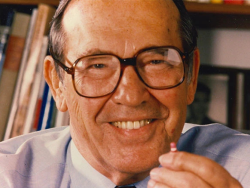
The antihistamine Benadryl has provided temporary relief from allergy symptoms for millions of people since it was developed by George Rieveschl at a University of Cincinnati laboratory in the early 1940s and later approved by the U.S. Food and Drug Administration (FDA). Rieveschl was originally…
Read More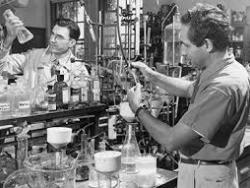
University of Wisconsin-Madison biochemist Karl Paul Link and his lab isolated an anticoagulant compound from spoiled sweet clover hay in 1939, after a Wisconsin farmer's cattle began hemorrhaging from the moldy feed. Their research led to warfarin, marketed first as a rat poison in 1948 and…
Read MoreIn the 1970s, microbiologist Satoshi Ōmura at Japan's Kitasato Institute isolated a soil bacterium that produced compounds effective against parasitic worms. Working under a partnership with Merck, parasitologist William C. Campbell's team refined these compounds into ivermectin, a veterinary…
Read More