

ASM International - The Materials Information Society - has designated Heroult Electric Arc Furnace an Historical Landmark. In 1907, at Shasta County, the first electric arc furnace in the western hemisphere was utilized for the direct production of iron from this area’s indigenous resources of magnetite (Fe3O4), charcoal, limestone, and hydro electricity. It operated at the town of Herouit, CA, named in honor of the furnace inventor Paul Herouit of France (who assisted in the installation).
ASM
Term Image

Society: ASMMain Category: MetalsSub Category: Minerals Extraction & RefiningEra: 1900-1909DateCreated: 190716349 Shasta Dam BoulevardShasta LakeState: CAZip: 96019Country: USAWebsite: https://www.hmdb.org/m.asp?m=70327Creator: Herouit, Paul
YearAdded:
1998
Society: ASMMain Category: MetalsSub Category: BridgesEra: 1830-1839DateCreated: 1839Market Street east of Bank StreetBrownsvilleState: PAZip: 15417Country: USAWebsite: https://www.hmdb.org/m.asp?m=252Creator: Delafield, Richard
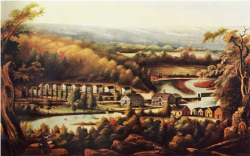
ASM International has designated Brownsville - Route 40 Bridge an historical landmark. This bridge, designed by and built under the supervision of Capt. Richard Delafield in 1839 to improve the "National Road", is the first cast iron bridge to be built west of the Allegheny Mountains.
YearAdded:
Image Credit: WikipediaImage Caption: Brownsville bridge
1988
ASM International - The Materials Information Society - has designated the Eli Whitney Armory an historical landmark. "On this site between 1798 and 1825, Eli Whitney built the first significant independent American armory. The development of materials processing innovations began the tradition of precision production and interchangeable parts in America." The Armory building houses the Eli Whitney Museum. Power was supplied from the nearby dam.
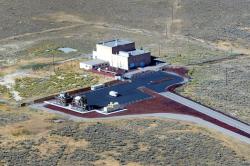
The first production of usable nuclear electricity occurred on December 20, 1951, when four light bulbs were lit with electricity generated from the EBR-1 reactor. Experimental Breeder Reactor No.1 was designated a Registered National Historic Landmark in 1966.
YearAdded:
Image Credit: Idaho National LaboratoryImage Caption: Birdseye view of EBR-I
2017
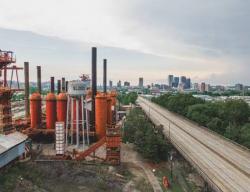
Sloss Blast Furnaces has been designated a National Historic Landmark. This site possesses national significance in commemorating the history of the United States of America.
1981.
ASM International has designated Sloss Furnaces an historical landmark.
Sloss Furnaces, which became operative in 1882, were instrumental in establishing the iron industry in the South. Modernized in 1927-1928, they remained in operation until 1970.
1986.
YearAdded:
Image Credit: Birmingham, Al GovernmentImage Caption: Sloss Blast Furnace site in Birmingham
1981
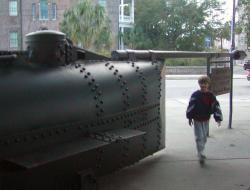
In the context of naval warfare, H.L. Hunley changed the world. Its builders' innovative use of materials, design and manufacturing techniques resulted in the world's first successful attack submarine.
YearAdded:
Image Credit: Edwin GrosvenorEra_date_from: 1860
2007
Innovations
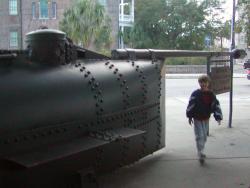
In the context of naval warfare, H.L. Hunley changed the world. Its builders' innovative use of materials, design and manufacturing techniques resulted in the world's first successful attack submarine.
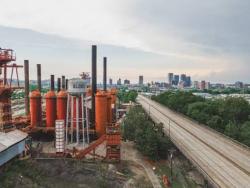
Sloss Blast Furnaces has been designated a National Historic Landmark. This site possesses national significance in commemorating the history of the United States of America.
1981.
ASM International has designated Sloss Furnaces an historical landmark.
Sloss Furnaces,…
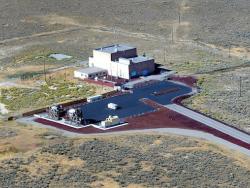
The first production of usable nuclear electricity occurred on December 20, 1951, when four light bulbs were lit with electricity generated from the EBR-1 reactor. Experimental Breeder Reactor No.1 was designated a Registered National Historic Landmark in 1966.
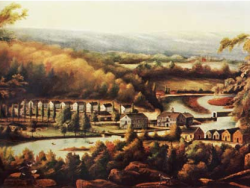
ASM International - The Materials Information Society - has designated the Eli Whitney Armory an historical landmark. "On this site between 1798 and 1825, Eli Whitney built the first significant independent American armory. The development of materials processing innovations began the tradition…
Read MoreASM International has designated Brownsville - Route 40 Bridge an historical landmark. This bridge, designed by and built under the supervision of Capt. Richard Delafield in 1839 to improve the "National Road", is the first cast iron bridge to be built west of the Allegheny Mountains.
ASM International - The Materials Information Society - has designated Heroult Electric Arc Furnace an Historical Landmark. In 1907, at Shasta County, the first electric arc furnace in the western hemisphere was utilized for the direct production of iron from this area’s indigenous resources of…
Read More