

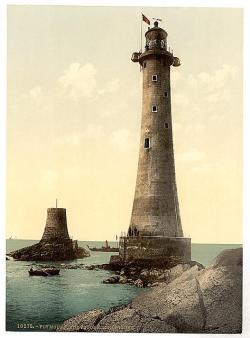
An early image of the James Douglass lighthouse, with the stump of the Smeaton-designed building beside it.
Eddystone Lighthouse is located in the English Channel, 14 miles south of Plymouth, England. The reef upon which it stands was the source of many shipwrecks... and many lighthouses, the first of which was built in 1698. The first three lighthouses were wooden, and suffered the fate of sea storms. John Smeaton built the fourth lighthouse in 1759 of Cornish granite.
1880-1889
YearAdded:
Image Credit: Public Domain; Produced prior to 1/1/1923Image Caption: Eddystone LighthouseEra_date_from: 1882
1991
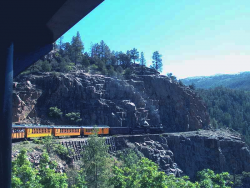
The Durango-Silverton Narrow Gauge Branch of the Denver & Rio Grande Western Railroad extends from the town of Durango to the mining camp of Silverton. Built in 1882 through one of the most rugged mountain areas of the nation, its complexity remains a testament to the role civil engineering played in the development of the western United States.
The tracks rise up the sheer, steep Animas Canyon, running along a rock ledge just wide enough to carry the train. The line is used today as a tourist attraction, carrying visitors through the picturesque San Juan Mountains.
YearAdded:
Image Caption: Durango and Silverton Narrow Gauge railway runs along the Highline.Era_date_from: 1882
1968
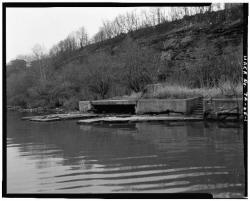
Before the Davis Island Lock & Dam were built, the flow of the Ohio River slowed to little more than a trickle during dry periods. For several months each year, the unreliable flow stranded Pittsburgh's steamboats, towboats, and barges.
The Davis Island Lock & Chanoine Dam experimental project was the first lock and dam ever constructed on the Ohio River. Its achievements also included the first rolling lock gates, the largest movable dam built in the 19th century, and the widest chamber in world history.
YearAdded:
Image Credit: Public Domain (National Park Service)Image Caption: Davis Island Lock and DamEra_date_from: 1885
1985
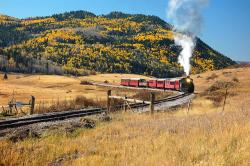
Winding over 64 miles through the majestic San Juan mountains, the narrow-gauge railway known today as the Cumbres and Toltec Scenic Railroad was built as a branch of the extensive Denver and Rio Grande Western Railroad that ran through western Colorado and most of Utah. It originally served the large number of settlers flocking to the gold and silver mines of the region.
YearAdded:
Image Credit: Courtesy Flickr/Larry Lamsa (CC BY 2.0)Image Caption: Cumbres and Toltec Scenic RailwayEra_date_from: 1880
1976
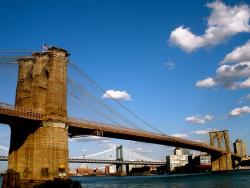
On May 24, 1883, with schools and businesses closed for the occasion, New York celebrated the opening of the Brooklyn Bridge. Also known as the Great East River Bridge, it was built over 14 years in the face of enormous difficulties. Deaths, fire in the Brooklyn caisson, and a scandal over inferior materials all added to the turmoil. The bridge is one of the most well-recognized symbols of American engineering, and remains the unofficial Eighth Wonder of the World.
YearAdded:
Image Credit: Courtesy Flickr/Sarah Ackerman (CC BY 2.0)Image Caption: The Brooklyn Bridge earned its title of (unofficial) Eight Wonder of the World through its incredible size and beautyEra_date_from: 1883
1972
Innovations