
USA

Development of Diagnostic Test Strips
Society: ACSMain Category: ChemicalSub Category: MedicalEra: 1940sDateCreated: 1941ETHOS Science CenterElkhartState: INCountry: USAWebsite: https://www.acs.org/content/acs/en/education/whatischemistry/landmarks/diagnosticteststrips.html, https://www.acs.org/content/dam/acsorg/education/whatischemistry/landmarks/diagnosticteststrips/development-of-diagnostic-test-strips-commemorative-booklet.pdfCreator: Free, Al, Free, Helen

It is difficult to recall a time when doctors and patients had trouble tracking the presence of glucose and other substances in urine and blood. Lack of sufficient measurement tools made it difficult to manage a host of diseases, including diabetes as well as other metabolic diseases and kidney and liver conditions. Today, self-management of these diseases is an easier process because of the development of diagnostic test strips by Alfred and Helen Free and their research team at Miles Laboratories.


The text of the plaque commemorating the development reads:
YearAdded:
2010
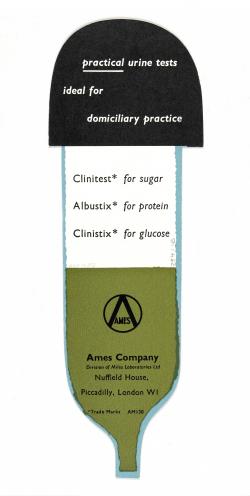
Image Caption: Advert for Ames home urine testing kit
Carbohydrate Metabolism - Carl and Gerty Cori
Society: ACSMain Category: ChemicalSub Category: MedicalEra: 1920-1929DateCreated: 1929Washington University School of MedicineSt. LouisState: MOCountry: USAWebsite: https://www.acs.org/content/acs/en/education/whatischemistry/landmarks/carbohydratemetabolism.html, https://www.acs.org/content/dam/acsorg/education/whatischemistry/landmarks/carbohydratemetabolism/carl-and-gerty-cori-and-carbohydrate-metabolism-commemorative-booklet.pdfCreator: Cori, Carl, Cori, Gerty

In brilliant collaboration, Carl and Gerty Cori studied how the body metabolizes glucose and advanced the understanding of how the body produces and stores energy. Their findings were particularly useful in the development of treatments for diabetes. In 1947 the Coris shared a Nobel Prize for their discoveries.


The plaque commemorating the event reads:

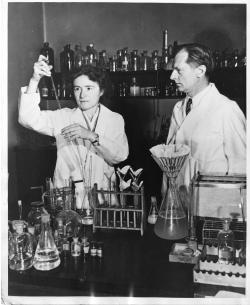
Image Caption: Biochemist Gerty Theresa Radnitz Cori (1896-1957) and her husband Carl Ferdinand Cori (1896-1984) were jointly awarded the Nobel Prize in medicine in 1947 for their work on how the human body metabolizes sugar.
Russell Marker and the Mexican Steroid Hormone Industry
Society: ACSMain Category: ChemicalSub Category: MedicalEra: 1930-1949DateCreated: 1938–1945Pond LaboratoryUniversity ParkState: PACountry: USAWebsite: https://www.acs.org/content/acs/en/education/whatischemistry/landmarks/progesteronesynthesis.htmlCreator: Marker, Russell

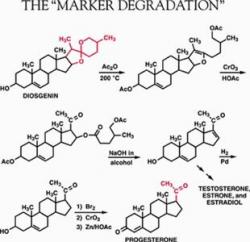
Steroid chemists often refer to the 1930s as the Decade of the Sex Hormones, when the molecular structures of certain sex hormones were determined and first introduced to medical practice as drugs. Russell Marker achieved the first practical synthesis of the pregnancy hormone, progesterone, by what now is known as the "Marker Degradation." Produced from starting material in a species of Mexican yam, Marker’s progesterone eventually became the preferred precursor in the industrial preparation of the anti-inflammatory drug cortisone.

YearAdded:
1999
Image Caption: Marker DegradationEra_date_from: 1938–1945
A.O. Smith Automatic Frame Plant
Society: ASMEMain Category: MechanicalSub Category: ManufacturingEra: 1920-1929DateCreated: 1920Milwaukee, WICountry: USAWebsite: https://www.asme.org/about-asme/who-we-are/engineering-history/landmarks/37-a-o-smith-automatic-frame-plantCreator: A.O. Smith Corporation

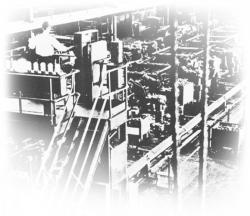
In 1899, during the earliest days of the automobile revolution, A. O. Smith developed a new, lightweight steel car frame. Within a few short years, he was selling these frames to a “who’s who” of car makers including Cadillac, Oldsmobile, and Ford. A. O. Smith’s son, Lloyd Raymond, carried on the family company, expanding the automotive business and introducing the world’s first automated frame production line, the Mechanical Marvel.

YearAdded:
1979
Image Credit: ASMEImage Caption: The entire line at the A. O. Smith Automatic Frame Plant was controlled by the man on the bridge. The long, intricate assembling process completed itself practically without human aid.Era_date_from: 1920
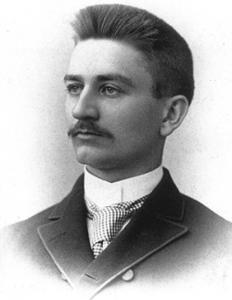
Herbert Dow in 1888 Photo courtesy of the Post Street Archives.
Society: ACSMain Category: ChemicalSub Category: Industrial AdvancesEra: 1900sDateCreated: 1891 Herbert H. Dow Historical MuseumMidlandState: MIZip: 48640Country: USAWebsite: https://www.acs.org/content/acs/en/education/whatischemistry/landmarks/bromineproduction.html, https://www.acs.org/content/dam/acsorg/education/whatischemistry/landmarks/bromineproduction/first-electrolytic-production-of-bromine-historical-resource.pdfCreator: Dow, Herbert H.

On January 4, 1891, Herbert H. Dow succeeded in producing bromine electrolytically from central Michigan’s rich brine resources. In the years that followed, this and other processes developed by Dow and the company he founded led to an increasing stream of chemicals from brines. The commercial success of these endeavors helped to promote the growth of the American chemical industry.


The plaque commemorating the event reads:

YearAdded:
1997
Image Credit: courtesy of the Post Street Archives.Image Caption: Herbert Dow in 1888
Commercial Process for Producing Calcium Carbide and Acetylene
Society: ACSMain Category: ChemicalSub Category: Industrial AdvancesEra: 1890-1899DateCreated: 1898Spray Cotton MillsEdenState: NCCountry: USAWebsite: https://www.acs.org/content/acs/en/education/whatischemistry/landmarks/calciumcarbideacetylene.html, https://www.acs.org/content/dam/acsorg/education/whatischemistry/landmarks/calciumcarbideacetylene/commericialization-of-calcium-carbide-and-acetylene-commemorative-booklet.pdfCreator: Willson, Thomas L.

In his search for a more economical way to make aluminum, Canadian inventor Thomas Leopold Willson accidentally discovered the first commercially viable process for making calcium carbide, which is used for production of acetylene gas, at a location in North Carolina. This chance discovery produced a series of products, from improved lighting in remote locations to the synthesis of a host of organic substances.

The plaque commemorating the event reads:

YearAdded:
1998
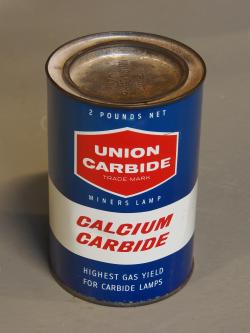
Image Caption: Photographed at the Den Hartogh Ford museum. Highest gas yield for carbide lamps. Sold by Union Carbide corporation, which was formed in 1898 to consolidate the interests of the Electrogas Company.
Discovery of Helium in Natural Gas
Society: ACSMain Category: ChemicalSub Category: Industrial AdvancesThe University of KansasLawrenceState: KSZip: 66045Country: USAWebsite: https://www.acs.org/content/acs/en/education/whatischemistry/landmarks/heliumnaturalgas.html, https://www.acs.org/content/dam/acsorg/education/whatischemistry/landmarks/heliumnaturalgas/discovery-of-helium-in-natural-gas-historical-resource.pdfCreator: Cady, Hamilton P., McFarland, David F.

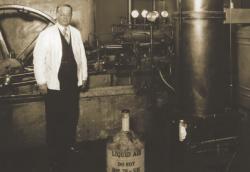
Working in Bailey Hall on December 7, 1905, Hamilton P. Cady and David F. McFarland discovered significant amounts of helium in a natural gas sample from Dexter, Kansas. Cady and McFarland subsequently analyzed more than 40 other gas samples, showing that helium, previously thought to be rare on Earth but abundant in the Sun, was available in plentiful quantities from the Great Plains of the United States. Helium-filled blimps were vital to the United States in World War II, and helium is still considered a national strategic reserve material.


YearAdded:
2000
Image Credit: Courtesy ACSImage Caption: Hamilton P. Cady with the liquid air machine in Bailey Hall.
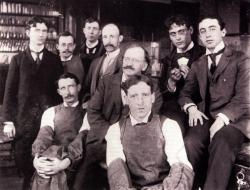
Morley with students and instructors, ca. 1893.
Society: ACSMain Category: ChemicalSub Category: Frontiers of KnowledgeDateCreated: 1895Case Western Reserve UniversityClevelandState: OHZip: 44106Country: USAWebsite: https://www.acs.org/content/acs/en/education/whatischemistry/landmarks/atomicweightofoxygen.htmlCreator: Morley, Edward W.

In his laboratory at Western Reserve University (Now Case Western Reserve University), Edward W. Morley carried out his research on the atomic weight of oxygen that provided a new standard to the science of chemistry. The accuracy of his analyses has never been superseded by chemical means. His great work, published in 1895, also gave important insight into the atomic theory of matter.

He observed, after carefully analysis of the volume proportions in which hydrogen and oxygen unite, that the atomic weight of oxygen was 15.879.

The plaque commemorating the event reads:

YearAdded:
1995
Image Credit: Courtesy ACSImage Caption: Morley with students and instructors, ca. 1893.
Curtis 500-kW Vertical Turbine
Society: ASMEMain Category: Electric, MechanicalSub Category: SteamEra: 1900-1909DateCreated: 1903IndianapolisState: INCountry: USAWebsite: https://www.asme.org/getmedia/a96bc2c9-0067-4463-8a61-dff227124ce8/144-Curtis-500-kW-Vertical-Turbine.aspx, https://www.asme.org/about-asme/who-we-are/engineering-history/landmarks/144-curtis-500-kw-vertical-turbineCreator: Curtis, Charles G.

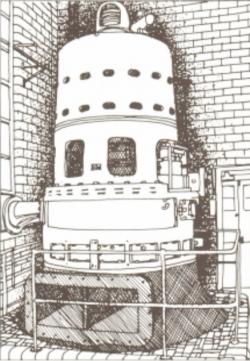
This, the first Curtis vertical turbine built, was constructed by the General Electric Co. for the Newport & Fall River Street Railway Co. It operated in the Newport, R.I., generating station until June 1927. It was transferred to the Harding Street Station of the Indianapolis Power & Light Co. for display and later moved to the company's E.W. Stout Station.

YearAdded:
1990
Image Caption: 5,000-kilowatt Curtis Steam Turbine-GeneratorEra_date_from: 1903
abacus II
Society: ASMEMain Category: MechanicalSub Category: Communications and Data ProcessingDateCreated: 1972Texas Instruments DallasState: TXCountry: USAWebsite: https://www.asme.org/about-asme/who-we-are/engineering-history/landmarks/160-abacus-ii-integrated-circuit-wire-bonderCreator: Texas Instruments

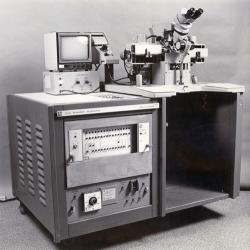
The ABACUS II, designed and built by Texas Instruments, was the first practical automated production machine for the assembly of integrated circuits. Using heat and pressure, it bonded fine gold wire to microscopic contacts on the silicon chip and pin connections on the package.

The ABACUS II could maintain a positioning accuracy of ± 0.00025 inch while bonding up to 375 devices an hour. Following the success of this prototype, almost 1,000 ABACUS II wire bonders were built, making the economical mass production of integrated circuits a reality.

YearAdded:
1992
Image Caption: ABACUS II Integrated-Circuit Wire BonderEra_date_from: 1972
Subscribe to USA

We hope you enjoyed this essay.

Please support America's only magazine of the history of engineering and innovation, and the volunteers that sustain it with a donation to Invention & Technology.

Donate

Stay informed - subscribe to our newsletter.
The subscriber's email address.