
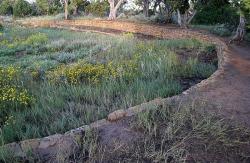
Four prehistoric reservoirs at Mesa Verde National Park were constructed and used between AD 750 and AD 1180. They are: Morefield Reservoir (in Morefield Canyon), Far View Reservoir (on Chapin Mesa), Sagebrush Reservoir (on an unnamed mesa), and Box Elder Reservoir (in Prater Canyon). These four ancient reservoirs represent extraordinary engineering achievements by the Ancestral Puebloan people. In an arid environment with very little surface water, these prehistoric people found ways to route and capture runoff to create sustainable domestic water supply reservoirs.
USA
YearAdded:
Image Credit: Courtesy Wikipedia/McGhiever (CC BY-SA 3.0)Image Caption: Prehistoric Mesa Verde ReservoirsEra_date_from: 750
2004
Society: ASMEMain Category: MechanicalSub Category: SafetyEra: 1930-1949DateCreated: 193714651 North Dallas Parkway, Suite 500
DallasState: TXZip: 75254Country: USAWebsite: https://www.asme.org/about-asme/engineering-history/landmarks/163-meter-type-gas-odorizerCreator: Sillers, Don A.
DallasState: TXZip: 75254Country: USAWebsite: https://www.asme.org/about-asme/engineering-history/landmarks/163-meter-type-gas-odorizerCreator: Sillers, Don A.
Created by Don A. Sillers, founder of Peerless Manufacturing, and Alexander Clarke, this early Type M gas odorizer—Serial No. 2105—served from 1942 to 1992. It injected a precise amount of pungent liquid into the gas flow. The patent was filed June 18, 1939, and granted (2,240,808) on May 6, 1941. The Type M odorizer established itself as a dependable, long-lasting safety device. This particular unit operated 25 years without maintenance.
YearAdded:
Image Caption: Meter-type Gas OdorizerEra_date_from: 1937
1992
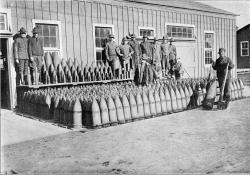
During the 1930's, research into advanced ballistic measurement techniques began at Aberdeen Proving Ground—the world's first large-scale, fully-instrumented ballistic range producing data on the aerodynamic characteristics of missiles in free flight.
YearAdded:
Image Credit: Courtesy U.S. Army RDECOMImage Caption: High Explosive shells at Aberdeen Proving GroundEra_date_from: 1943
1982
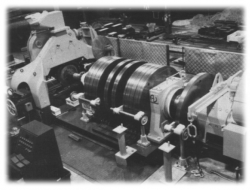
This inertia dynamometer is used to test railroad wheels under controlled conditions that can greatly exceed normal service. It is the first and only railroad dynamometer to test track wheels using vertical and lateral loads, as well as thermal braking loads, at the wheel rim. It can also test railway car and locomotive axles.
YearAdded:
Image Caption: AAR Railroad-wheel DynamometerEra_date_from: 1955
1988
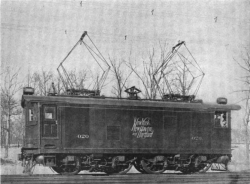
This was a pioneering venture in mainline railroad electrification and was a proving ground for railroad electrification technology. It established single-phase alternating current as a technical and economical alternative to direct current. This concept exerted considerable influence over subsequent systems both in the United States and abroad. The major components of the system were developed by the engineering staffs of the New York, New Haven & Hartford Railroad and the Westinghouse Electric and Manufacturing Company of East Pittsburgh, Pennsylvania.
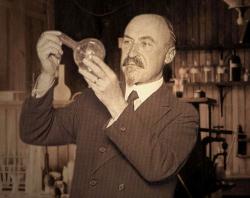
Around 1907, Belgian-born chemist Leo Hendrik Baekeland took two ordinary chemicals, phenol and formaldehyde, mixed them in a sealed autoclave, and subjected them to heat and pressure.
The sticky, amber-colored resin he produced in his Yonkers laboratory was the first plastic ever to be created entirely from chemicals, and the first material to be made entirely by man.
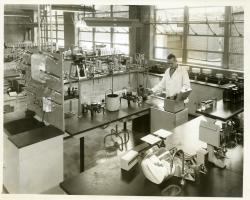
When Arnold Beckman, a professor of analytical chemistry at the California Institute of Technology, was asked to devise a way to measure acidity in citrus fruit, the resulting “acidometer” revolutionized chemical instrumentation. The innovative features of the pH meter, including its use of integrated electronic technology and all-in-one design, were the basis for subsequent modern instrumentation developed by Beckman and his company.
The plaque commemorating the development reads:
YearAdded:
Image Credit: Courtesy Science History InstituteImage Caption: Chemist George Garcelon using a portable Beckman pH meter in laboratory, 1951. Interior of Research Laboratory, Althouse Chemical Plant, 500 Pear Street, Reading, PennsylvaniaEra_date_from: 1936
2004

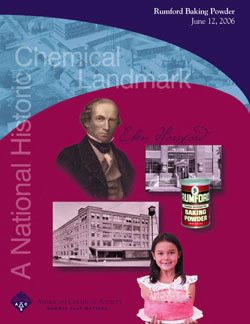
Bread is considered a basic foodstuff; eaten down through the ages, it continues to be a staple of the modern diet. The development of baking powder made baking easier, quicker and more reliable for bakers in the mid-19th century. Eben Horsford’s unique formula was an important innovation and made the making of biscuits, cookies and other quick baking products simpler than before.
The commemorative plaques read:
YearAdded:
Image Credit: Courtesy Wikicommons/Lou Sander (CC BY-SA 3.0)Image Caption: In 2006 Rumford Baking Powder was designated a National Historic Chemical Landmark in recognition of its significance for making baking easier, quicker, and more reliable. Ingredients are monocalcium phosphate, sodium bicarbonate, and cornstarch.
2006

Founded in 1957, Raychem Corporation was the first company to successfully apply the new science of radiation chemistry to commercial use. This accomplishment led to the creation of tough new materials and high-performance products such as irradiated polyethylene insulated wire and heat-shrinkable tubing through the crosslinking of polymeric materials.
YearAdded:
Image Caption: First Successful Commercialization of Radiation Chemistry
1997
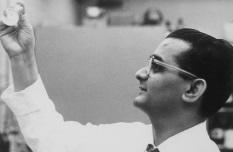
Monroe Wall, Mansukh Wani and colleagues at the Natural Products Laboratory of the Research Triangle Institute discovered and elucidated the structure Taxol®and camptothecin, two life-saving compounds for the treatment of cancer. These natural products kill cancer cells via unique mechanisms of action and in ways scientists had not previously imagined. The work of this research team led to the eventual development and marketing of drugs that have been approved for treatment of ovarian, breast, lung, and colon cancer and Kaposi’s sarcoma.
YearAdded:
Image Credit: Courtesy ACSImage Caption: Mansukh C. Wani
2003
Innovations