
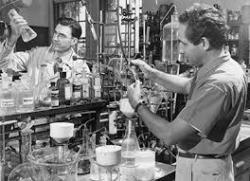
University of Wisconsin-Madison biochemist Karl Paul Link and his lab isolated an anticoagulant compound from spoiled sweet clover hay in 1939, after a Wisconsin farmer's cattle began hemorrhaging from the moldy feed. Their research led to warfarin, marketed first as a rat poison in 1948 and later approved as the blood-thinning drug warfarin sodium (Coumadin) in 1954. It remains one of the world's most widely prescribed anticoagulants.
1950-1959
YearAdded:
Image Credit: The University of Wisconsin Collection, The American Chemical SocietyImage Caption: Mark A. Stahmann (left) and Karl Paul Link discovered dicumarol, a powerful anticoagulant. They are shown in 1940 in a UW-Madison biochemistry laboratory.2022
Courtesy of The University of Wisconsin Collection
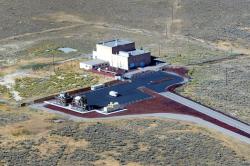
The first production of usable nuclear electricity occurred on December 20, 1951, when four light bulbs were lit with electricity generated from the EBR-1 reactor. Experimental Breeder Reactor No.1 was designated a Registered National Historic Landmark in 1966.
YearAdded:
Image Credit: Idaho National LaboratoryImage Caption: Birdseye view of EBR-I
2017
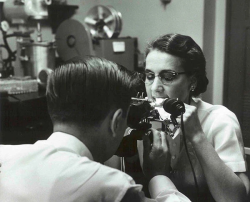
Trials of the new product were launched in the 1950s at Indiana University (IU), in Bloomington. There, a dentist instructed children to brush their teeth — in whichever way they normally did — with a new kind of paste. After six months, the kids came back for a checkup. These local children were not just dental patients, they were participants in one of the biggest clinical trials ever run on toothpaste. The main investigator in this endeavor was Dr. Joseph Muhler, a dentist and assistant professor in the university’s chemistry department.
YearAdded:
Image Credit: Procter & GambleImage Caption: A technician checks Crest’s tooth cleaning ability using a microscope and ultraviolet light.
2024
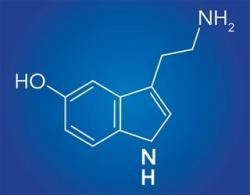
In the 1940s, researchers Irvine Page, Maurice Rapport, Arda Green and Betty Twarog made pioneering discoveries that transformed modern neuroscience. While investigating hypertension at Cleveland Clinic, Page, Rapport and Green helped identify and isolate serotonin (5-hydroxy-tryptamine). Twarog later demonstrated its presence in the mammalian brain, establishing serotonin as a neurotransmitter. Together, their breakthroughs opened the door to understanding serotonin’s essential roles in regulating mood, appetite, digestion, healing and numerous physiological processes.
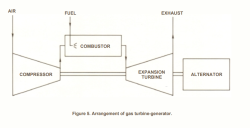
The Belle Isle gas turbine was installed in 1949 and was the first gas turbine built in the United States for the purpose of generating electric power. Its low cost and consistency aroused considerable interest in the electric utility industry, both here and abroad.
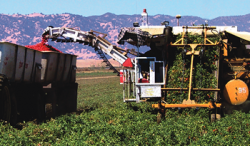
In 1942, University of California, Davis (UCD) biologist, Jack Hanna recognized the need for breeding tomato varieties that ripen uniformly and withstand the rigors of mechanical harvesting. In 1949, UCD agricultural engineer Coby Lorenzen and Hanna began developing a mechanical tomato harvester. Parallel efforts by others, notably those started in 1957 by agricultural engineer Bill Stout and horticulturist Stan Ries of Michigan State University, eventually resulted in several different harvesting mechanisms. In the late 1950s, UCD agricultural engineer Steven J.
YearAdded:
2005
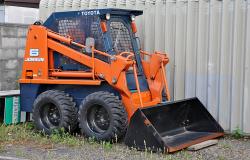
Brothers Cyril and Louis Keller designed and built the first small, lightweight, three-wheel, front-end loader in their machinist-blacksmith shop in Rothsay, Minnesota. A local farmer wanted to mechanize cleaning manure from his obstacle-filled, two-story turkey barn. The machine, first used in 1957, was able to turn completely around within its own length. Melroe Manufacturing Company, Gwinner, ND purchased the rights to the Keller loader and hired the Kellers to continue development of the loader in 1958.
YearAdded:
Image Credit: Courtesy WikiCommons/Tennen-Gas (CC BY-SA 3.0)Image Caption: A modern skid steer loader, Toyota Jobsun 4SDK6 model
2004
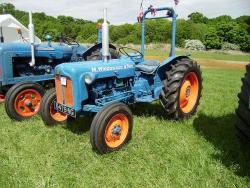
The First Agricultural Tractor Roll-Over Protection Structure (Rops) In The USA Resulted From Research By Lloyd H. Lamouria, Ralph R. Parks And Coby Lorensen At The Agricultural Engineering Department Of The University Of California At Davis. It Was Designed And Successfully Tested In The Summer Of 1956. It Was Exhibited And Reported At The Annual Meeting Of The Pacific Coast Section Of The American Society Of Agricultural Engineers (ASAE) In December 1956. Warren I. Hanson, Safety Coordinator, N.
YearAdded:
Image Credit: Courtesy Wikicommons/BulldozerD11 (CC BY 3.0)Image Caption: Ford Tractor with fitted ROPS bar
1986
On April 12, 1955, Dr. Jonas Salk, a slightly built, forty-year-old research professor from the University of Pittsburgh, became a hero. On that morning, before one hundred and fifty news reporters and five hundred scientists and physicians crammed into an auditorium at the University of Michigan, “amid fanfare and drama far more typical of a Hollywood premiere than a medical meeting,” according to an account in The New York Times, it was announced that Dr. Salk had developed a vaccine that had been found effective in preventing poliomyelitis.
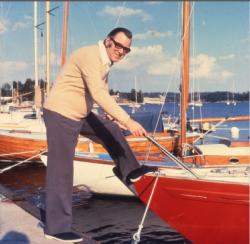
During the winter of 1957-58, Earl E. Bakken developed the first wearable transistorized pacemaker, the request of heart surgeon, Dr. C. Walton Lillehei. As earlier pacemakers were AC-powered, this battery-powered device liberated patients from their power-cord tethers. The wearable pacemaker was a significant step in the evolution to fully-implantable units.
YearAdded:
Image Credit: Courtesy Professor Marko Turina, University Hospital, Zurich (CC BY 3.0)Image Caption: Arne H. W. Larsson (26th May 1915 to 28th December 2001) was the first recipient of an implantable pacemaker. He received the first device in 1958 and had a total of 26 devices during his life. He became an advocate for patients needing pacemakers, campaigning for greater funding and research in this area.Era_date_from: 1957
1999
Innovations

Founded in 1957, Raychem Corporation was the first company to successfully apply the new science of radiation chemistry to commercial use. This accomplishment led to the creation of tough new materials and high-performance products such as irradiated polyethylene insulated wire and heat-…
Read More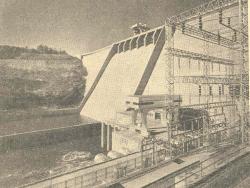
The integration of pump and turbine was the first of many to be installed in power-plant systems in the United States. It was the largest and most powerful in the world. As a "pump storage" unit in the Tennessee Valley Authority's system, it effected significant economies in the generation of…
Read More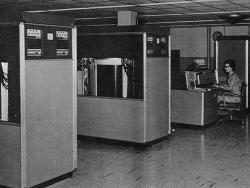
The IBM 350 disk drive storage development led to the breakthrough of on-line computer systems by providing the first storage device with random access to large volumes of data. Since its introduction on September 4, 1956, it has become the primary computer bulk-storage medium, displacing…
Read More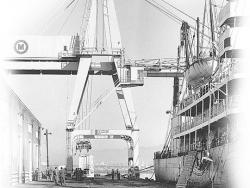
The world's first high-speed, dockside container-handling cranes reduced ship turnaround time from three weeks to eighteen hours. They became the model and set the standard for future designs worldwide. In service January 7, 1959, the A-frame cranes built at Encinal Terminals in Alameda,…
Read More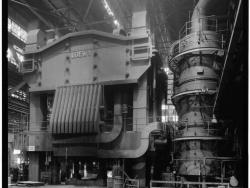
This hydraulic closed-die press, among the largest fabrication tools in the world, has had a profound influence in America's leading role in commercial aircraft, military aircraft, and space technology. As part of the same Heavy Press Program that created the Mesta press, the Wyman-Gordon press…
Read More
The DWP was the first mechanized, compact service-line trencher developed for laying underground water lines between the street-main and the house. This machine, first produced in 1949, replaced manual digging, thus making installation of running water and indoor plumbing affordable for the…
Read More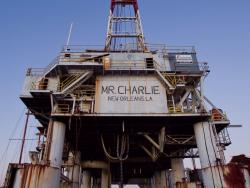
Designed by Alden “Doc” Laborde, Mr. Charlie is the first offshore drilling rig that was fully transportable, submersible and self-sufficient, allowing it to drill more than 200 oil and gas wells along the Gulf Coast between 1954 and 1986.
Laborde, a young U.S. Navy engineer, had the…
Read More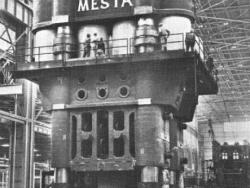
This 50,000-ton die-forging press is among the largest fabrication tools in the world. It was designed and built for the U.S. Air Force by the Mesta Machine Company of Pittsburgh, following the discovery of a 30,000-ton press used by the Germans in World War II (later acquired by the Soviet…
Read More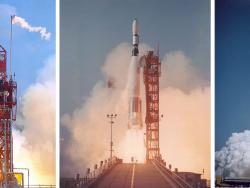
The Atlas E-2 Space Booster, or launch vehicle, is a modified intercontinental ballistic missile developed by the Convair Division of General Dynamics and the U.S. Air Force. The basic concept of the Atlas system was proven in its first flight on June 11, 1957, followed over the years by the… Read More
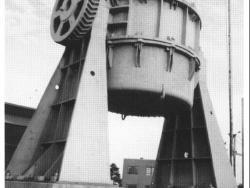
This is one of the three original 60-ton vessels by which the basic oxygen process (BOP) of steel making was introduced into this country from Austria, where it was invented. It heralded the first new technology in fifty years to become the basis of a major process for steel production throughout… Read More
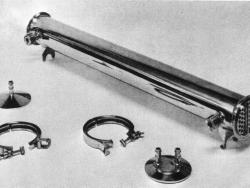
This is the first commercial, human-blood heat exchanger. Developed in 1957, it permitted a patient's body temperature to be safely and rapidly lowered during open heart surgery to any desired and precisely controlled hypothermic level, then during the conclusion of the operation rapidly rewarmed… Read More
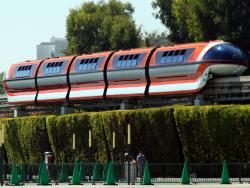
Disney engineers designed this monorail system based on the system developed by Axel Wenner-Gren of the Alweg Company in Cologne, West Germany. Wenner-Gren ran his experimental monorail in 1952 on a level track, and when adopted by Disney in 1959, it was designed to simulate the terrain typical of… Read More
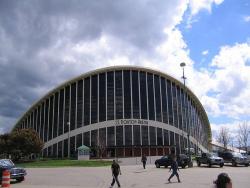
The Dorton Arena was the first use of a cable-supported roof system in the world. Commissioned in 1949 by North Carolina State Fair manager J.S. Dorton, the new building was intended to be a livestock judging pavilion. Architect Matthew Nowicki (1910 - 1950) proposed a structure that…
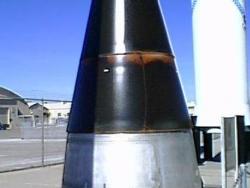
From 1956 to 1993, the GE Re-entry Systems facility was home to thousands of engineers and technicians who solved the problem of vehicles successfully reentering the Earth’s atmosphere. As described by aerospace pioneer Theodore Von Karman, “ Reentry… is perhaps the most difficult problem one…
Read More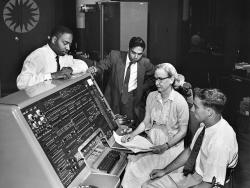
A curious child who dissembled the clocks in her parent's home, Grace Hopper graduated from Vassar College with a B.A. in mathematics and physics. She continued her education at Yale University by completing a masters and Ph.D. in mathematics. She then returned to Vassar to teach.
During World… Read More
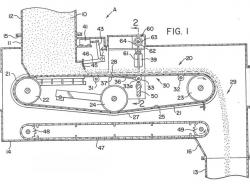
A variety of mechanical feeders, including drag-chain conveyors and rotary pocket feeders, historically have been used to volumetrically control the flow of fuel to coal pulverizers on power generators. Most power generation in the United States has relied on burning fossil fuels in steam…
Read More
Frank Zybach, a tenant farmer and inventor living near Strasburg, Colorado, received a patent for a "Self-Propelled Sprinkling Irrigating Apparatus" on July 22, 1952.
The device used mobile towers to continuously move a pipeline in a circle around a pivot. Water was supplied through the pivot and… Read More
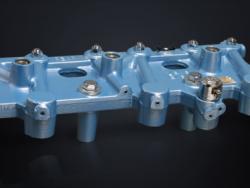
The Jake Brake permits large trucks to descend long, steep grades at a controlled speed. It was the first practical mechanism for altering on demand the valve timing on a truck diesel engine, thereby converting the engine to a power absorbing machine. The modified engine can continue to power the… Read More
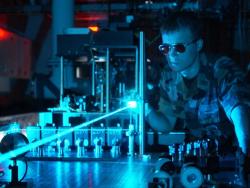
As ideas developed, they abandoned infrared radiation to instead concentrate upon visible light. The concept originally was called an "optical maser". In 1958, Bell Labs filed a patent application for their proposed optical maser; and Schawlow and Townes submitted a manuscript of their theoretical… Read More

The Mackinac (pronounced "Mack-in-awe") Bridge (1957) spans the Straits of Mackinac between Lake Michigan and Lake Huron, connecting the Lower and Upper peninsulas of Michigan. Prior to the construction of the bridge, a fleet of nine ferries would carry as many as 9,000 vehicles per day, with…
Read More