

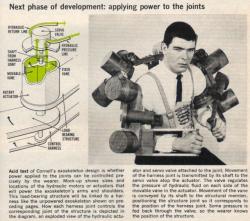
Tracing its history to the earliest days of powered flight – to the Wright brothers and Glenn Curtiss – the site began as the research laboratory of the Curtiss-Wright Aircraft Company. After World War II, it was donated to Cornell University, and in January 1946 opened its doors as the Cornell Aeronautical Laboratory. Nearly every military aircraft and space vehicle developed in the United States from the end of World War II until the present day has been tested at the facility, now known as Calspan.
AIAA
Term Image

YearAdded:
Image Caption: Ronald Patterson, a Cornell Aeronautical Labs technician, poses with a prototype of the lab's famous "man-amplifier" concept in 1961.Era_date_from: 1946
2010
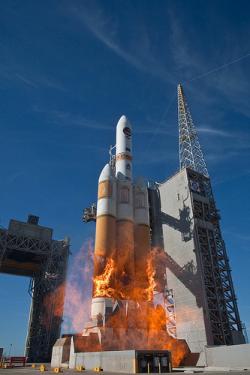
Vandenberg Air Force Base was the nation’s first space and ballistic missile operational and training base. Beginning with its first launch, a Thor Intermediate Range Ballistic Missile (IRBM) on December 16, 1958, it has been the launch site of many of America’s military satellites and polar-orbiting satellites.
YearAdded:
Image Credit: Courtesy Flickr/DVIDSHUB (CC BY 2.0)Image Caption: Delta IV Launch at Vandenberg Air Force BaseEra_date_from: 1942
2009
Beech Factory Landing FieldWichitaState: KSZip: 67206Country: USAWebsite: https://www.aiaa.org/HistoricAerospaceSites/Creator: Cessna, Clyde , Beech, Walter
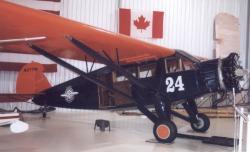
The Travel Air Airplane Manufacturing Company served as the incubator in which Wichita Kansas’ present-day status as the world’s “Air Capital” first developed. The firm was among the first viable airplane manufacturers to be established in Wichita (1925). It also was responsible for four aviation legends firmly establishing themselves in Wichita and forming the nexus between Wichita and world aviation: Walter Beech, Olive Ann Mellor (later Olive Ann Beech), Clyde Cessna, and Lloyd Stearman.
YearAdded:
Image Credit: Courtesy Wikipedia/RuthAS (CC BY 3.0)Image Caption: Travel Air Airplane Manufacturing Company in WichitaEra_date_from: 1925
2006
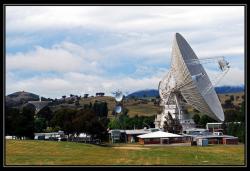
Established between 1967, the Honeysuckle Creek Tracking Station, along with the Tidbinbilla and Orroral Valley sites, supported NASA’s Deep Space Network, Manned Space Flight Network, and Spacecraft Tracking and Data Acquisition Network. The stations played a key role in supporting the Apollo 11 moon landing, with the Honeysuckle Creek facility providing the first historic pictures of man walking on the moon on July 20, 1969 (July 21st in Australia), as well as providing voice and telemetry contact with the lunar module.
YearAdded:
Image Credit: Courtesy Flickr/wxwhyz (CC BY 2.0)Image Caption: Honeysuckle Creek Tracking StationEra_date_from: 1967
2010
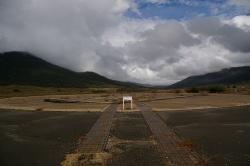
Established 1965 the Orroral Valley Station, as well as the Honeysuckle Creek (1967) and Tidbinbilla (1965) sites supported NASA’s Deep Space Network, Manned Space Flight Network, and Spacecraft Tracking and Data Acquisition Network. The stations played a key role in supporting the Apollo 11 moon landing, with the Honeysuckle Creek facility providing the first historic pictures of man walking on the moon on July 20, 1969 (July 21st in Australia), as well as providing voice and telemetry contact with the lunar module.
YearAdded:
Image Credit: Courtesy Flickr/Percita (CC BY-SA 2.0)Image Caption: Orroral Valley Tracking StationEra_date_from: 1965
2010
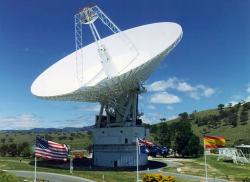
Established 1965 the Tidbinbilla Tracking Station, as well as the Honeysuckle Creek (1967-1981) and Orroral Valley (1965-1985) sites, supported NASA’s Deep Space Network, Manned Space Flight Network, and Spacecraft Tracking and Data Acquisition Network. The stations played a key role in supporting the Apollo 11 moon landing, with the Honeysuckle Creek facility providing the first historic pictures of man walking on the moon on July 20, 1969 (July 21st in Australia), as well as providing voice and telemetry contact with the lunar module.
YearAdded:
Image Credit: Original Image: Public Domain (NASA)Image Caption: Tidbinbilla Tracking StationEra_date_from: 1965
2010
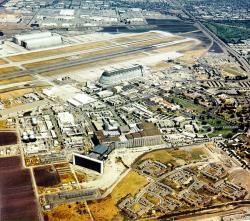
Established in 1939 by the National Advisory Committee for Aeronautics (NACA), and named after NACA’s first chairman, Joseph S. Ames, the center has been at the forefront of American, and worldwide, aeronautics research.
YearAdded:
Image Credit: Public Domain (NASA)Image Caption: NASA Ames Research CenterEra_date_from: 1939
2009
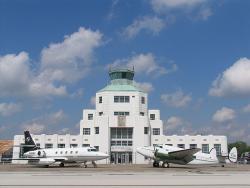
The terminal, designed by noted architect Joseph Finger and built by the Works Progress Administration, is a rare remaining example of classic art deco airport architecture, featuring the distinctive design elements of that age: step forms, sweeping curves, and intricate geometrical patterns and motifs. Opened on September 28, 1940, the terminal was Houston’s gateway to the world, and served the fleets of Braniff Airlines and Eastern Air Lines.
YearAdded:
Image Credit: Courtesy Wikipedia/Mlickliter (CC BY-SA 3.0)Image Caption: Houston Municipal Airport TerminalEra_date_from: 1940
2009
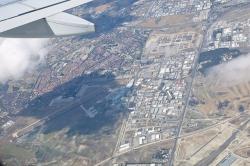
Getafe Airfield was the site of the world’s first successful rotorcraft flight, on January 17, 1923. Lieutenant Alejandro Gómez Spencer piloted a C.4 Autogiro designed and built by Juan de la Cierva, who tested a series of autogiros between 1920 and 1924 at the Getafe site. Cierva’s autogiros introduced important technologies and flight techniques that led to the development of helicopters and other rotary wing aircraft. Getafe Air Base, established in 1911, now houses several training and transport units of the Spanish Air Force, as well as two aerospace manufacturing plants.
YearAdded:
Image Credit: Courtesy Flickr/Jumbero (CC BY-SA 2.0)Image Caption: Getafe AirfieldEra_date_from: 1911
2011
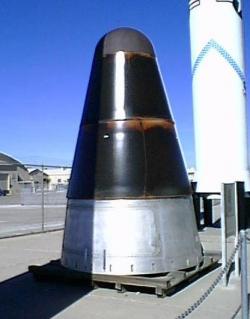
From 1956 to 1993, the GE Re-entry Systems facility was home to thousands of engineers and technicians who solved the problem of vehicles successfully reentering the Earth’s atmosphere. As described by aerospace pioneer Theodore Von Karman, “ Reentry… is perhaps the most difficult problem one can imagine.” Whether it was the first operational reentry vehicle for the Atlas ICBM, the recovery of the first man-made object from orbit, or the first probe to enter Jupiter’s atmosphere, some of the most significant milestones in aerospace were accomplished by those working in this facility.
YearAdded:
Image Credit: Public Domain (Author's Choice)Image Caption: GE Re-entry SystemsEra_date_from: 1956
2007
Innovations