
Beginning in 1961, at what was then the Ramo-Wooldridge Corporation, the dedicated employees of Space Park designed and built more than 100 of the world’s most technically challenging satellites, rocket engines and astronomical observatories.
USA
Society: AIAAMain Category: Aerospace & AviationSub Category: AerospaceEra: 1960-1969DateCreated: 19611 Space Park DrRedondo BeachState: CAZip: 90278Country: USAWebsite: https://aiaa.org/about-aiaa/history-heritage/historic-aerospace-sites/Creator: Ramo-Wooldridge Corporation
YearAdded:
Image Credit: Funhistory; Wikipedia; CC0; American Institute of Aeronautics and AstronauticsImage Caption: Space Park Quad
2011
Main Category: Aerospace & AviationSub Category: AerospaceEra: 1900-1909DateCreated: 19048419 NY-54HammondsportState: NYZip: 14840Country: USAWebsite: https://aiaa.org/about-aiaa/history-heritage/historic-aerospace-sites/Creator: Curtiss, Glenn H.
Image Caption: Hammondsport Launch 1913
Hammondsport is the proud hometown of Glenn H. Curtiss, a legendary figure in early flight and the Father of Naval Aviation. It was here, between 1904 and 1915, that Curtiss collaborated with other aviation pioneers, including Alexander Graham Bell, to foster significant advancements in the field. In 1908, John Newton Williams achieved the first U.S. manned vertical lift with a Curtiss engine. The Curtiss School of Aviation, founded in 1910, witnessed Blanche Stuart Scott’s historic flight as the first woman to solo an aircraft in the U.S.
YearAdded:
Image Credit: American Institute of Aeronautics and Astronautics2025
Image Caption: Hammondsport Launch 1913
Main Category: ChemicalSub Category: MedicalEra: 1980-1989DateCreated: 1887126 E Lincoln AveRahwayState: NJZip: 07065Country: USAWebsite: https://www.acs.org/education/whatischemistry/landmarks/ivermectin-mectizan.htmlCreator: Ōmura, Satoshi , Campbell, William C.
In the 1970s, microbiologist Satoshi Ōmura at Japan's Kitasato Institute isolated a soil bacterium that produced compounds effective against parasitic worms. Working under a partnership with Merck, parasitologist William C. Campbell's team refined these compounds into ivermectin, a veterinary treatment approved in 1981 and later adapted into Mectizan, approved for human use in 1987 to treat river blindness. Merck committed to donating Mectizan indefinitely to combat the disease, and Ōmura and Campbell shared the 2015 Nobel Prize in Physiology or Medicine for the discovery.
YearAdded:
Image Credit: Courtesy of Merck & Co., Inc., and The American Chemical SocietyImage Caption: William C. Campbell, shown here, shared the 2015 Nobel Prize in Physiology or Medicine with his collaborator on ivermectin, Satoshi Ōmura, and Tu Youyou, who discovered a treatment for malaria.
2016
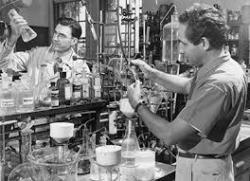
University of Wisconsin-Madison biochemist Karl Paul Link and his lab isolated an anticoagulant compound from spoiled sweet clover hay in 1939, after a Wisconsin farmer's cattle began hemorrhaging from the moldy feed. Their research led to warfarin, marketed first as a rat poison in 1948 and later approved as the blood-thinning drug warfarin sodium (Coumadin) in 1954. It remains one of the world's most widely prescribed anticoagulants.
YearAdded:
Image Credit: The University of Wisconsin Collection, The American Chemical SocietyImage Caption: Mark A. Stahmann (left) and Karl Paul Link discovered dicumarol, a powerful anticoagulant. They are shown in 1940 in a UW-Madison biochemistry laboratory.2022
Courtesy of The University of Wisconsin Collection
Society: ASMMain Category: MetalsSub Category: Minerals Extraction & RefiningEra: 1900-1909DateCreated: 190716349 Shasta Dam BoulevardShasta LakeState: CAZip: 96019Country: USAWebsite: https://www.hmdb.org/m.asp?m=70327Creator: Herouit, Paul
ASM International - The Materials Information Society - has designated Heroult Electric Arc Furnace an Historical Landmark. In 1907, at Shasta County, the first electric arc furnace in the western hemisphere was utilized for the direct production of iron from this area’s indigenous resources of magnetite (Fe3O4), charcoal, limestone, and hydro electricity. It operated at the town of Herouit, CA, named in honor of the furnace inventor Paul Herouit of France (who assisted in the installation).
YearAdded:
1998
Society: ASMMain Category: MetalsSub Category: BridgesEra: 1830-1839DateCreated: 1839Market Street east of Bank StreetBrownsvilleState: PAZip: 15417Country: USAWebsite: https://www.hmdb.org/m.asp?m=252Creator: Delafield, Richard
ASM International has designated Brownsville - Route 40 Bridge an historical landmark. This bridge, designed by and built under the supervision of Capt. Richard Delafield in 1839 to improve the "National Road", is the first cast iron bridge to be built west of the Allegheny Mountains.
YearAdded:
Image Credit: WikipediaImage Caption: Brownsville bridge
1988
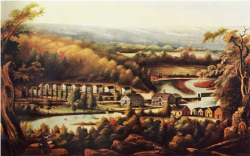
ASM International - The Materials Information Society - has designated the Eli Whitney Armory an historical landmark. "On this site between 1798 and 1825, Eli Whitney built the first significant independent American armory. The development of materials processing innovations began the tradition of precision production and interchangeable parts in America." The Armory building houses the Eli Whitney Museum. Power was supplied from the nearby dam.
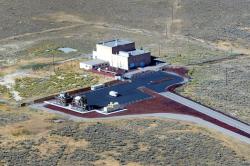
The first production of usable nuclear electricity occurred on December 20, 1951, when four light bulbs were lit with electricity generated from the EBR-1 reactor. Experimental Breeder Reactor No.1 was designated a Registered National Historic Landmark in 1966.
YearAdded:
Image Credit: Idaho National LaboratoryImage Caption: Birdseye view of EBR-I
2017
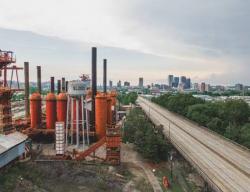
Sloss Blast Furnaces has been designated a National Historic Landmark. This site possesses national significance in commemorating the history of the United States of America.
1981.
ASM International has designated Sloss Furnaces an historical landmark.
Sloss Furnaces, which became operative in 1882, were instrumental in establishing the iron industry in the South. Modernized in 1927-1928, they remained in operation until 1970.
1986.
YearAdded:
Image Credit: Birmingham, Al GovernmentImage Caption: Sloss Blast Furnace site in Birmingham
1981
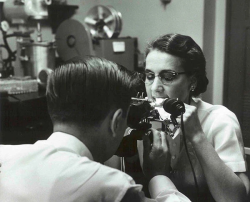
Trials of the new product were launched in the 1950s at Indiana University (IU), in Bloomington. There, a dentist instructed children to brush their teeth — in whichever way they normally did — with a new kind of paste. After six months, the kids came back for a checkup. These local children were not just dental patients, they were participants in one of the biggest clinical trials ever run on toothpaste. The main investigator in this endeavor was Dr. Joseph Muhler, a dentist and assistant professor in the university’s chemistry department.
YearAdded:
Image Credit: Procter & GambleImage Caption: A technician checks Crest’s tooth cleaning ability using a microscope and ultraviolet light.
2024
Innovations
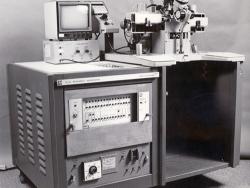
The ABACUS II, designed and built by Texas Instruments, was the first practical automated production machine for the assembly of integrated circuits. Using heat and pressure, it bonded fine gold wire to microscopic contacts on the silicon chip and pin connections on the package.
The…
Read More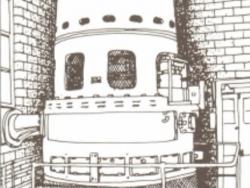
This, the first Curtis vertical turbine built, was constructed by the General Electric Co. for the Newport & Fall River Street Railway Co. It operated in the Newport, R.I., generating station until June 1927. It was transferred to the Harding Street Station of the Indianapolis Power &…
Read More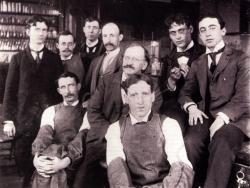
In his laboratory at Western Reserve University (Now Case Western Reserve University), Edward W. Morley carried out his research on the atomic weight of oxygen that provided a new standard to the science of chemistry. The accuracy of his analyses has never been superseded by chemical means. His…
Read More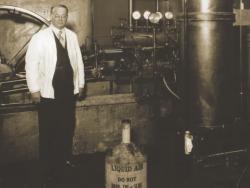
Working in Bailey Hall on December 7, 1905, Hamilton P. Cady and David F. McFarland discovered significant amounts of helium in a natural gas sample from Dexter, Kansas. Cady and McFarland subsequently analyzed more than 40 other gas samples, showing that helium, previously thought to be rare on…
Read More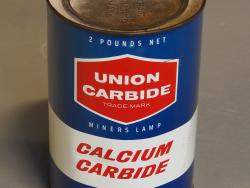
In his search for a more economical way to make aluminum, Canadian inventor Thomas Leopold Willson accidentally discovered the first commercially viable process for making calcium carbide, which is used for production of acetylene gas, at a location in North Carolina. This chance discovery…
Read More
On January 4, 1891, Herbert H. Dow succeeded in producing bromine electrolytically from central Michigan’s rich brine resources. In the years that followed, this and other processes developed by Dow and the company he founded led to an increasing stream of chemicals from brines. The commercial…
Read More
In 1899, during the earliest days of the automobile revolution, A. O. Smith developed a new, lightweight steel car frame. Within a few short years, he was selling these frames to a “who’s who” of car makers including Cadillac, Oldsmobile, and Ford. A. O. Smith’s son, Lloyd Raymond, carried on…
Read More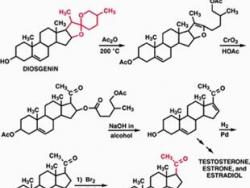
Steroid chemists often refer to the 1930s as the Decade of the Sex Hormones, when the molecular structures of certain sex hormones were determined and first introduced to medical practice as drugs. Russell Marker achieved the first practical synthesis of the pregnancy hormone, progesterone, by…
Read More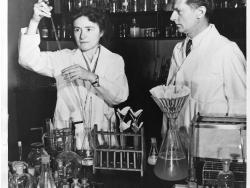
In brilliant collaboration, Carl and Gerty Cori studied how the body metabolizes glucose and advanced the understanding of how the body produces and stores energy. Their findings were particularly useful in the development of treatments for diabetes. In 1947 the Coris shared a Nobel Prize for…
Read More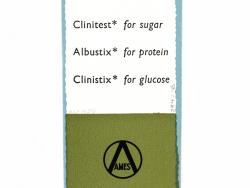
It is difficult to recall a time when doctors and patients had trouble tracking the presence of glucose and other substances in urine and blood. Lack of sufficient measurement tools made it difficult to manage a host of diseases, including diabetes as well as other metabolic diseases and kidney…
Read More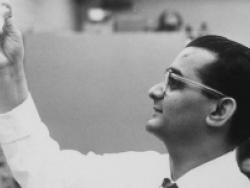
Monroe Wall, Mansukh Wani and colleagues at the Natural Products Laboratory of the Research Triangle Institute discovered and elucidated the structure Taxol®and camptothecin, two life-saving compounds for the treatment of cancer. These natural products kill cancer cells via unique mechanisms of…
Read More
Founded in 1957, Raychem Corporation was the first company to successfully apply the new science of radiation chemistry to commercial use. This accomplishment led to the creation of tough new materials and high-performance products such as irradiated polyethylene insulated wire and heat-…
Read More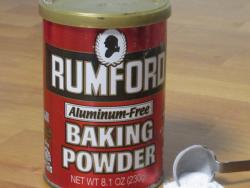
Bread is considered a basic foodstuff; eaten down through the ages, it continues to be a staple of the modern diet. The development of baking powder made baking easier, quicker and more reliable for bakers in the mid-19th century. Eben Horsford’s unique formula was an important innovation and…
Read More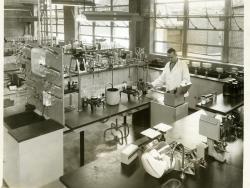
When Arnold Beckman, a professor of analytical chemistry at the California Institute of Technology, was asked to devise a way to measure acidity in citrus fruit, the resulting “acidometer” revolutionized chemical instrumentation. The innovative features of the pH meter, including its use of…
Read More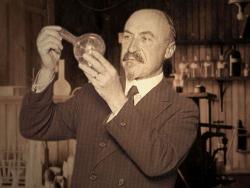
Around 1907, Belgian-born chemist Leo Hendrik Baekeland took two ordinary chemicals, phenol and formaldehyde, mixed them in a sealed autoclave, and subjected them to heat and pressure.
The sticky, amber-colored resin he produced in his Yonkers laboratory was the first plastic ever to be…
Read More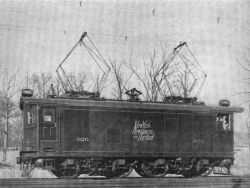
This was a pioneering venture in mainline railroad electrification and was a proving ground for railroad electrification technology. It established single-phase alternating current as a technical and economical alternative to direct current. This concept exerted considerable influence over…
Read More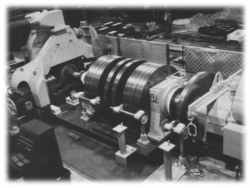
This inertia dynamometer is used to test railroad wheels under controlled conditions that can greatly exceed normal service. It is the first and only…
Read More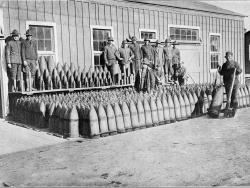
During the 1930's, research into advanced ballistic measurement techniques began at Aberdeen Proving Ground—the world's first large-scale, fully-instrumented ballistic range producing data on the aerodynamic characteristics of missiles in free flight.
Although this research had begun…
Read MoreCreated by Don A. Sillers, founder of Peerless Manufacturing, and Alexander Clarke, this early Type M gas odorizer—Serial No. 2105—served from 1942 to 1992. It injected a precise amount of pungent liquid into the gas flow. The patent was filed June 18, 1939, and granted (2,240,808) on May 6,…
Read More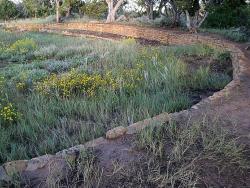
Four prehistoric reservoirs at Mesa Verde National Park were constructed and used between AD 750 and AD 1180. They are: Morefield Reservoir (in Morefield Canyon), Far View Reservoir (on Chapin Mesa), Sagebrush Reservoir (on an unnamed mesa), and Box Elder Reservoir (in Prater Canyon). These four…
Read More