
USA

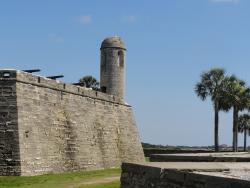
Castillo de San Marcos
Society: ASCEMain Category: CivilSub Category: BuildingsEra: 1600sDateCreated: 1672-1695St. AugustineState: FLCountry: USAWebsite: http://www.asce.org/Project/Castillo-de-San-Marcos/

The fort was constructed of coquina rock. Unique to Florida, the rock consists of millions of seashells cemented together. It proved highly durable and easily absorbed the force of many cannon balls. 

The Castillo de San Marcos was the first permanent European settlement in the continental United States. Originally an outpost of the Spanish Empire, it is the oldest major engineered structure existing in America.
YearAdded:
1975
Image Credit: Courtesy Flickr/inazakira (CC BY-SA 2.0)Image Caption: Castillo de San MarcosEra_date_from: 1672
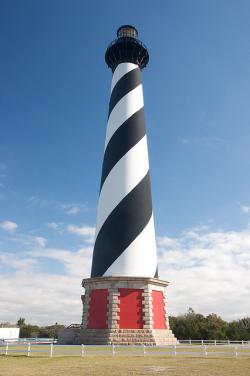
Cape Hatteras Lighthouse
Society: ASCEMain Category: CivilSub Category: Water TransportationEra: 1800-1829DateCreated: 1803Cape HatterasState: NCCountry: USAWebsite: http://www.asce.org/project/Cape-Hatteras-Lighthouse/

The Atlantic Ocean's northward-flowing Gulf Stream meets the southward-flowing Labrador Current at a point marked approximately by North Carolina's Outer Banks. Since the earliest days of United States commerce, shifting tides, inclement weather, treacherous shoals, and a low-lying shoreline there contributed to what soon became known as the Graveyard of the Atlantic. Warning sailors of this danger quickly became a top priority in the integrated system of navigational aids provided by the federal government to promote safe passage along the Atlantic Coast.  

YearAdded:
1999
Image Credit: Courtesy Flickr/almassengale (CC BY-ND 2.0)Image Caption: Cape Hatteras LighthouseEra_date_from: 1803
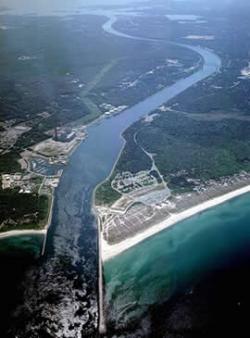
Cape Cod Canal
Society: ASCEMain Category: CivilSub Category: Water TransportationEra: 1900-1909DateCreated: 1909-1914Cape CodState: MACountry: USAWebsite: http://www.asce.org/Project/Cape-Cod-Canal/Creator: Parsons, William Barclay

The idea of a canal eliminating the costly and dangerous sea trip around the Massachusetts peninsula of Cape Cod was envisioned as early as 1623 by Pilgrim leader Miles Standish. It was not until financier August Belmont became involved in 1906, however, that sufficient funds for the project could be raised. Belmont had been the primary backer of New York City's first subway, and chose the subway's chief engineer, William Barclay Parsons, as the canal's project director.  

YearAdded:
1985
Image Credit: Courtesy nae.usace.army.milImage Caption: Cape Cod CanalEra_date_from: 1909
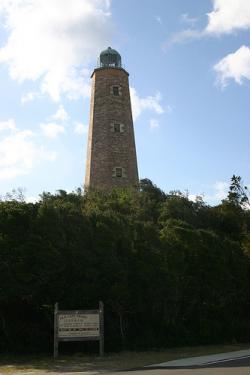
Old Cape Henry Lighthouse
Society: ASCEMain Category: CivilSub Category: Water TransportationEra: 1750-1799DateCreated: 1792Cape HenryVirginia BeachState: VAZip: 23459Country: USAWebsite: http://www.asce.org/Project/Old-Cape-Henry-Lighthouse/Creator: McComb, John

The Old Cape Henry Light house was the first construction project authorized by the First Congress. Constructed by John McComb, Jr. of New York City, this project set the stage for all subsequent public works projects of the Federal Government. In addition, this specific lighthouse was a vital navigation aid to all shipping through the Virginia Capes, thereby enhancing international and coastal trade with the Mid-Atlantic States.  

YearAdded:
2002
Image Credit: Courtesy Flickr/Matt Howry (CC BY 2.0)Image Caption: Old Cape Henry LighthouseEra_date_from: 1792
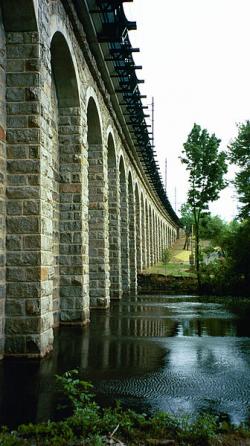
Canton Viaduct
Society: ASCEMain Category: CivilSub Category: BridgesEra: 1830-1839DateCreated: 1835CantonState: MACountry: USAWebsite: http://www.asce.org/Project/Canton-Viaduct/Creator: McNeill, William Gibbs , Whistler, George Washington

For more than 174 years, the Canton Viaduct has stood as a dominating structure on the New England landscape. When completed in 1835, the slightly curved, granite masonry bridge - 615 feet long, 70 feet high, and 22 feet wide - carried a single track of the Boston and Providence Railroad, providing a critical link in the establishment of rail service between Boston and New York. In 1860, a second track was added. With few major alterations, the viaduct has continued to provide safe rail transportation to heavier and faster loads throughout the 20th century.

YearAdded:
1998
Image Credit: Public Domain (Author's Choice)Image Caption: Canton ViaductEra_date_from: 1835
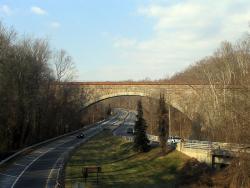
Cabin John Aqueduct
Society: ASCEMain Category: CivilSub Category: Bridges, Transportation, Water Supply & ControlEra: 1860-1869DateCreated: 1864Cabin JohnState: MDCountry: USAWebsite: http://www.asce.org/Project/Cabin-John-Aqueduct/Creator: Meigs, Montgomery

Cabin John Aqueduct, designed by Montgomery C. Meigs, conveys drinking water from Great Falls, Maryland to Washington, D.C. It was the longest stone masonry arch in the world for nearly 40 years. The segmental arch of the bridge has a span of 220 feet and a rise of only 57 feet. The main arch ring is built of cut and dressed granite. The secondary arch ring is radially-laid sandstone, of which the rest of the bridge is also constructed. 

YearAdded:
1972
Image Credit: Public Domain (Author's Choice)Image Caption: Cabin John AqueductEra_date_from: 1864
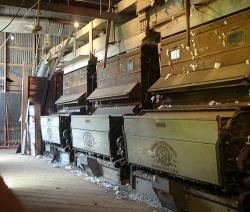
Society: ASMEMain Category: MechanicalSub Category: TextileEra: 1910-1919DateCreated: 1914307 North Main StreetBurtonState: TXZip: 77835Country: USAWebsite: http://www.asme.org/about-asme/history/landmarks/topics-m-z/textile/-173-burton-farmers-gin-mill-%281914%29Creator: Lummus Cotton Gin Company
This is the earliest known survivor of an integrated cotton ginning system widely used to process cotton from wagon to bale in a continuous operation. The gin machinery was designed and built in 1914 by the Lummus Cotton Gin Company. It can process seven bales per hour. Five gin stands, stick machine, burr machine, separators, cleaners, press pump, and pneumatic conveying fans are driven by a 125-hp Bessemer oil engine. This gin ran commercially until 1974 and was restored to operating condition in 1993.
YearAdded:
1994
Image Credit: Courtesy Flickr/John W. Schulze (CC BY 2.0)Image Caption: Burton Farmers Gin MillEra_date_from: 1914
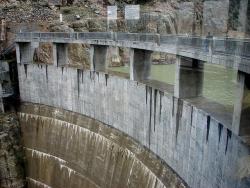
Buffalo Bill Dam
Society: ASCEMain Category: CivilSub Category: DamsEra: 1900-1909DateCreated: 1905-1910Park CountyCodyState: WYCountry: USAWebsite: http://www.asce.org/project/Buffalo-Bill-Dam/Creator: Wheeler, Edgar

The Buffalo Bill Dam, known as the Shoshone Dam until 1946, was the first mass concrete dam in America. At nearly 325 feet high, it was also the tallest dam in the world at the time of completion.

YearAdded:
1973
Image Credit: Courtesy Flickr/Bob Bolhuis (CC BY-SA 2.0)Image Caption: Buffalo Bill DamEra_date_from: 1905
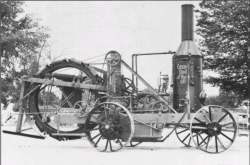
Society: ASMEMain Category: MechanicalSub Category: Materials Handling & ExcavationEra: 1900-1909DateCreated: 1902Hancock Historical MuseumFindlayState: OHZip: 45840Country: USAWebsite: http://www.asme.org/about-asme/history/landmarks/topics-m-z/materials-handling-and-excavation/-133-buckeye-steam-traction-ditcher-%281902%29Creator: Hill, James

During the post-Civil War era, efforts to cultivate the land for higher crop yields resulted in the digging of thousands of miles of ditches to improve land drainage. Accurately graded ditches were needed for open drainage, pipeline trenches and placement of underground agricultural drainage tile. Teams of skilled workers laid out the direction and gradient of a ditch and dug it out with pick and shovel. The Black Swamp area, where Lake Erie drains into northwest Ohio and southeast Michigan, was the center of much of the U.S. ditching activity.

YearAdded:
1988
Image Caption: Buckeye Steam Traction DitcherEra_date_from: 1902
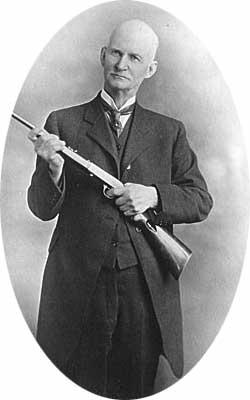
Society: ASMEMain Category: MechanicalSub Category: ManufacturingEra: 1870-1879DateCreated: 1878John M. Browning Firearms MuseumOgdenState: UTZip: 84401Country: USAWebsite: http://www.asme.org/about-asme/history/landmarks/topics-m-z/manufacturing---2/-141-browning-firearms-collection-%281878%29Creator: Browning, John Moses
This collection recognizes the inventive talents of John Moses Browning (1855-1926), a prolific and significant designer of sporting and military firearms, whose designs were known for simplicity, accuracy, and reliability. He held more than 128 patents covering 80 distinct firearms produced by Winchester, Remington, Colt, Fabrique Nationale, Savage, and General Motors (during wartime), among others.
YearAdded:
1989
Image Credit: Public Domain; Produced prior to 1/1/1923Image Caption: Browning Firearms CollectionEra_date_from: 1878
Subscribe to USA

We hope you enjoyed this essay.

Please support America's only magazine of the history of engineering and innovation, and the volunteers that sustain it with a donation to Invention & Technology.

Donate

Stay informed - subscribe to our newsletter.
The subscriber's email address.