
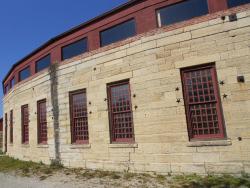
The Chicago, Burlington, & Quincy Railroad was the first railroad to link Chicago and the Mississippi River, in the 1850s. This forty-stall roundhouse, large even for its time, became a major center for railroad activity for the CB&Q. It served as a repair and construction facility from which more locomotives and cars than any other CB&Q installation were built. Steam engines, passenger cars, freight cars, precision parts, tools, and machines were designed and built, beginning about 1858.
USA
YearAdded:
Image Credit: Courtesy Flickr/EarlRShumaker (CC BY 2.0)Image Caption: Chicago Burlington & Quincy Railroad RoundhouseEra_date_from: 1850s
1988
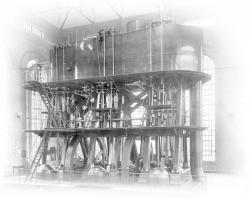
At the site of the first water pumping station providing water and sewage systems to the City of Erie in 1868, the Chestnut Street Pumping Station houses one of the largest steam engines, which pumped 20 million gallons a day. The triple-expansion steam reciprocating engine, which pumped water from the filter plant to the city reservoir, was typical of those used in municipal water pumping stations throughout the country during the late nineteenth and early twentieth centuries.
YearAdded:
Image Caption: Chestnut Street Pumping EngineEra_date_from: 1913
1981
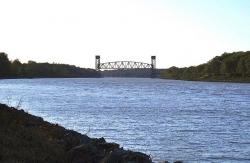
The Chesapeake & Delaware Canal is the only canal built in 19th-century America that still operates today as a major shipping route. Connecting the Port of Baltimore and Upper Chesapeake Bay with the mouth of the Delaware River and the Port of Philadelphia, the canal was one of the first civil engineering projects proposed in the New World and one of the most difficult to carry out. Although only 14 miles long, the canal's original cost made it one of the most expensive canals ever built in America.
YearAdded:
Image Credit: Original Image: Courtesy Flickr/Lee Cannon (CC BY-SA 2.0)Image Caption: Chesapeake and Delaware CanalEra_date_from: 1829
1985
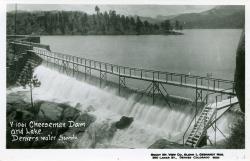
The Cheesman Dam was the first major dam in the U.S. to incorporate the gravity arch, and upon completion it was the highest gravity arch stone masonry dam in the world. It is the key structure in Denver's water supply.
Three years into original construction, flooding swept away the partially completed rock-filled structure. A solid masonry replacement dam was completed in just five years - a major feat for such a remote and complex project. When it was finished, the dam rose higher than the tallest building in Denver.
YearAdded:
Image Credit: Public DomainImage Caption: Cheesman DamEra_date_from: 1905
1973
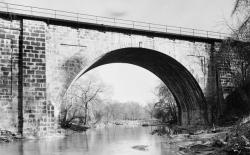
The Carrollton Viaduct over Gwynn's Falls was the first masonry railroad viaduct constructed in the United States. This structure proved the feasibility of using a viaduct to transport railway vehicles across wide and deep valleys.
YearAdded:
Image Credit: Public Domain (National Park Service)Image Caption: Carrollton ViaductEra_date_from: 1829
1982
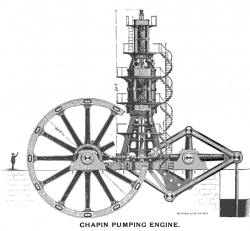
As one of the large strikes in the Lake Superior geological district, the Chapin Mine was located under a cedar swamp and unminable until it was drained by one of the largest pumping engines of the 1880s. Miners at the Chapin Mine, which began producing ore in 1880, soon tried to sink a deep shaft through 90 feet of quicksand, using enormous pumps driven by compressed air. The sand was frozen using two of the largest refrigeration compressors built, and a sectional cast-iron circular shell lined the D shaft. Mining continued for ten years using conventional pumps to dewater the lower levels.
YearAdded:
Image Credit: Public Domain; Produced prior to 1/1/1923Image Caption: Chapin Mine PumpEra_date_from: 1893
1987
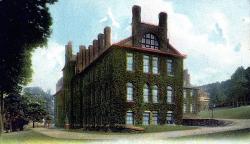
The William H. Chandler Chemistry Laboratory was conceived and planned by William Henry Chandler (1841-1906), professor, chairman, librarian, and acting president of Lehigh University. Designed by Philadelphia architect Addison Hutton and erected between 1884 and 1885 at a cost of $200,000, the building set the standard for laboratory construction for the next half century.
YearAdded:
Image Credit: Public Domain; Produced prior to 1/1/1923Image Caption: Chandler Chemistry LaboratoryEra_date_from: 1865
1994
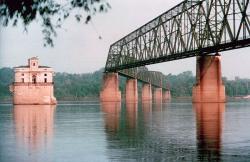
Clarifying the turbid waters of the Mississippi River for use as drinking water was a formidable challenge. The Chain of Rocks Water Purification Plant provided the first application of a system of flocculation, sedimentation, and rapid sand filtration for water purification.
The system played a major role in reducing the impact of St. Louis' typhoid and cholera epidemic of 1903 that claimed 287 lives. Continued improvements to the plant reduced that number to 91 by 1914. It is estimated that 1,900 lives were likely saved between 1903 and 1915 due to the filtration system.
YearAdded:
Image Credit: Public Domain (Author's Choice)Image Caption: Chain of Rocks Water Purification PlantEra_date_from: 1903
1981
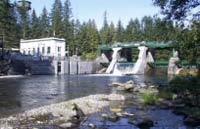
Requests for public power in Seattle began in the late 1890s and lead to the voter approval for building the Cedar Falls Water Supply hydroelectric dam plant in 1902. The first municipally developed and owned hydroelectric plant in the United States began operation in October 1904. The facility is situated one-half mile below Cedar Lake (later known as Chester Morse Lake) near North Bend in King County.
YearAdded:
Image Credit: Source: http://www.seattle.govImage Caption: Cedar Falls Water SupplyEra_date_from: 1905
2000
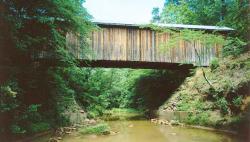
In 1894, Catawba County, North Carolina commissioners asked local landowners to build and maintain an 85-foot-long bridge across Lyles Creek. The community hired Andy L. Ramsour, who served as keeper of the Horseford covered bridge over the Catawba River in Hickory, North Carolina.
YearAdded:
Image Credit: Public Domain (National Park Service)Image Caption: Bunker Hill Covered BridgeEra_date_from: 1894
2001
Innovations