

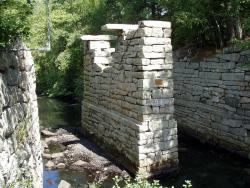
While the Erie Canal has become well-known in the annals of American history, the Middlesex Canal, built two decades earlier and a model for canal engineers throughout young America, has only recently become recognized for its important achievements. Extending 27 miles northeast from Boston harbor to the Merrimack River near present-day Lowell, Masachusetts, the Middlesex Canal provided low-cost and efficient freight transport for almost five decades, helping to establish the canal in the U.S. as a viable means of economic development.
USA
YearAdded:
Image Credit: Courtesy Wikipedia/Daderot (CC BY-SA 3.0)Image Caption: Middlesex CanalEra_date_from: 1803
1967
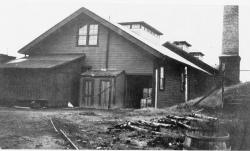
The city of Shreveport could not justify the cost of building a water distribution system solely for the purpose of supplying potable water. It was a series of disastrous fires in the 1880s that galvanized support for a pumping facility that would provide ample water for firefighting.
YearAdded:
Image Credit: Public Domain (National Park Service)Image Caption: McNeill Street Pumping StationEra_date_from: 1887
1999
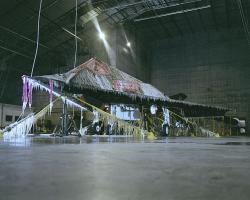
Designed and constructed in the early 1940s, this laboratory has an unequalled capacity to simulate a wide range of climatic conditions from arctic cold to jungle moisture. Data from tests of some three hundred different aircraft and over two thousand items of equipment has provided information vital to the performance, safety, and reliability of aircraft operating in extremes of weather.
YearAdded:
Image Credit: Public Domain (United States Air Force)Image Caption: McKinley Climatic LaboratoryEra_date_from: 1944
1987
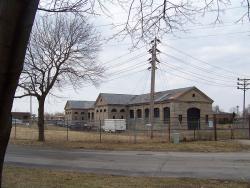
When the Adams Plant went into operation on August 26, 1895, it represented a key victory for alternating-current systems over direct-current. The clear advantage of high voltage AC for long distance power transmission and the unprecedented size of the plant (it reached its full capacity of ten 5,000-HP generators in May 1900) influenced the future of the electrical industry worldwide.
In August 1895 the Adams No. 1 generating station of the Niagara Falls Power Company first supplied electric power to local industries in Niagara Falls, New York.
YearAdded:
Image Credit: Courtesy Wikipedia/Lvklock (CC BY-SA 3.0)Image Caption: Adams Hydroelectric Generating PlantEra_date_from: 1895
1990
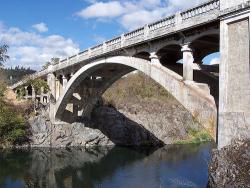
The Rogue River Bridge was the most advanced concrete bridge in America when it was built. Distinguished bridge engineer Conde McCullough employed the techniques of Frenchman Eugene Freyssinet to create thin, graceful concrete arches for this seven-span structure.
Pre-compression of the concrete arch was achieved and, as a result of its success, pre-stressing became one of the hallmarks of American bridge building techniques.
YearAdded:
Image Credit: Courtesy Flickr/Bruce Fingerhood (CC BY 2.0)Image Caption: Rogue River BridgeEra_date_from: 1931
1982
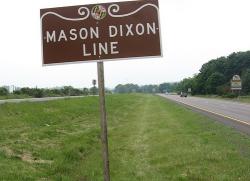
The granite milestones marking the Mason-Dixon Line bear crests from the two parties involved in the land-grant dispute, the families of William Penn and Charles Calvert (also known as Lord Baltimore).
YearAdded:
Image Credit: Original Image: Flickr/Padraic (CC BY-SA 2.0)Image Caption: Mason-Dixon LineEra_date_from: 1767
1977
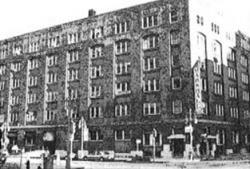
Designed by Claude A. P. Turner, a pioneer of reinforced concrete construction, the Marshall Building was constructed originally in 1906 as a five-story building. In 1911 the sixth floor of the building was added as per Turner's original design. This building is the oldest extant example of Turner's "mushroom" flat-slab system which transformed the design and construction of reinforced-concrete floors worldwide.
YearAdded:
Image Credit: Courtesy ASCEImage Caption: Marshall BuildingEra_date_from: 1906
2002
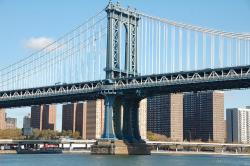
When opened in 1909, the 1,470 foot long main span of the Manhattan Bridge was the third longest suspension bridge span in the world, after the nearby Brooklyn and Williamsburg Bridges. The Manhattan Bridge has two 725 foot long suspended side spans for an overall length of 2,920 feet. The bridge deck is supported by 4 main cables of 20.75 inch diameter, each composed of more than 35,000 individual wires. The bridge deck is stiffened by four parallel trusses of 24 foot depth, hinged at the towers.
YearAdded:
Image Credit: Courtesy Flickr/Dave Herholz (CC BY-SA 2.0)Image Caption: Manhattan BridgeEra_date_from: 1909
2009
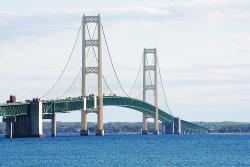
The Mackinac (pronounced "Mack-in-awe") Bridge (1957) spans the Straits of Mackinac between Lake Michigan and Lake Huron, connecting the Lower and Upper peninsulas of Michigan. Prior to the construction of the bridge, a fleet of nine ferries would carry as many as 9,000 vehicles per day, with traffic backups stretching as long as 16 miles.
YearAdded:
Image Credit: Courtesy Flickr/Miss a Liss (CC BY-ND 2.0)Image Caption: Mackinac BridgeEra_date_from: 1958
2009
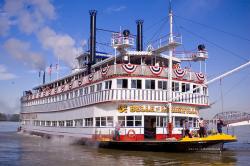
The Belle of Louisville, built in 1914, is the oldest operating “western rivers” steamboat. It has the shallow-draft flat-bottom hull braced by hog-chain trusses, multiple fire-tube boilers, paddlewheel propulsion, and superstructure configuration that were characteristic of hundreds of steamboats that plied America’s rivers during the 19th and 20th centuries
YearAdded:
Image Credit: Courtesy Flickr/Bailey Visual Life (CC BY 2.0)Image Caption: Belle of Louisville, still in operationEra_date_from: 1914
2010
Innovations