

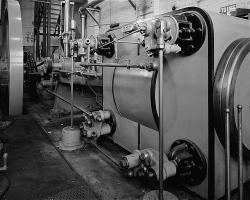
This 350-horsepower Corliss type steam engine is an example of a typical late nineteenth century steam engine. The essential feature of Corliss type engines is the valves that admit steam to and exhaust it from the cylinder. The Corliss valve gear made the engine extremely efficient in steam consumption and was the most efficient system for controlling low to medium speed engines.
This particular engine operated for more than eighty years, having been retired not by age but over concern for stack emissions by the U.S. Environmental Protection Agency. The engine was built by the William A.
USA
YearAdded:
Image Credit: Public Domain (National Park Service)Image Caption: Harris-Corliss Steam EngineEra_date_from: 1895
1985
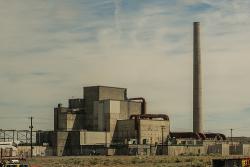
The Hanford B-Reactor was the first plutonium production reactor to be placed in operation. Its success made possible the subsequent development of atomic energy. The research work, engineering, and planning required to make the reactor operate is one of our most advanced achievements. Much of the reactor core, cooling system, shielding, and auxiliary systems were designed by mechanical engineers.
YearAdded:
Image Credit: Courtesy Flickr/David Lee (CC BY-SA 2.0)Image Caption: Hanford B ReactorEra_date_from: 1944
1976
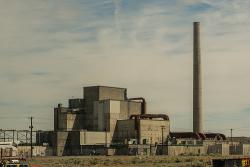
In the first nine months of operation, the B reactor produced fissionable plutonium for the world's first atomic bomb (the Trinity test on July 16, 1945), and for the atomic bomb that was dropped on Nagasaki, Japan, on August 9, 1945, killing 35,000 people. This, and similar destruction at Hiroshima caused by the atomic bomb dropped three days earlier, hastened the end of World War II.
YearAdded:
Image Credit: Courtesy Flickr/David Lee (CC BY-SA 2.0)Image Caption: Hanford B ReactorEra_date_from: 1944
1993
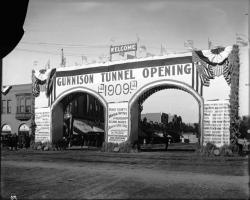
At its completion, the 5.8-mile Gunnison Tunnel under western Colorado's Vernal Mesa was the longest irrigation tunnel in America. It carried water from the Gunnison River to the Uncompahgre Valley to irrigate 146,000 acres of cropland.
Work on the 30,582-foot tunnel was first performed manually. Adverse geological conditions provided great challenge for this pioneering project. The drilling crews had to deal with clay, sand, shale, and a badly fractured fault zone.
YearAdded:
Image Credit: Public Domain; Produced prior to 1/1/1923Image Caption: Gunnison TunnelEra_date_from: 1909
1972
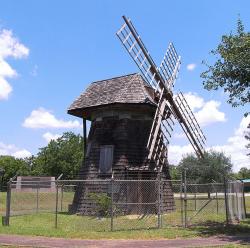
This is an old technology brought here by new immigrants. It represents the beginning of modern life in a hard wilderness. This wind-powered gristmill was built in 1870 by Fred Meiss, Jr., and Otto Fiek near Spring Creek, from parts of the first windmill in the new state of Texas, erected by E.G. Witte. The millstones are the ones Witte imported from Europe and are believed to be one of the earliest sets in the United States to survive.
YearAdded:
Image Credit: Courtesy Wikipedia/Larry D. Moore (CC BY-SA 3.0)Image Caption: German RocketEra_date_from: 1944
1991
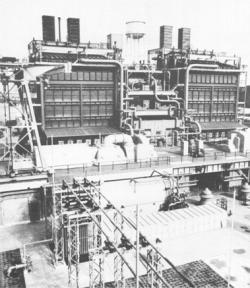
On April 21, 1949, a completely outdoor turbine-generator was placed into commercial operation at the Greens Bayou electric power plant--the first fully outdoor unit to operate in the United States. The demand for unprecedented quantities of electricity after World War II pressed utilities to provide addition power quickly. The outdoor design, unlike the traditional large turbine hall, resulted in significant reductions in the cost per kilowatt to build the plant.
YearAdded:
Image Credit: Courtesy ASMEImage Caption: Greens Bayou Generator PlantEra_date_from: 1949
1991
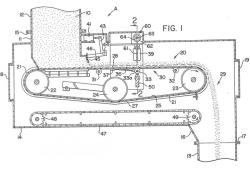
A variety of mechanical feeders, including drag-chain conveyors and rotary pocket feeders, historically have been used to volumetrically control the flow of fuel to coal pulverizers on power generators. Most power generation in the United States has relied on burning fossil fuels in steam boilers, with coal as the fuel of choice. By the 1920s, pulverized-firing (the burning in suspension of finely ground coal particles) evolved as means to more complete fuel combustion and higher system efficiencies and facilitated the use of larger boilers.
YearAdded:
Image Caption: Drawing from patent documents for Gravimetric Coal Feeder.Era_date_from: 1957
1995
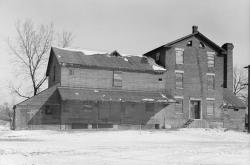
Designed and built by Fred Graue, a German immigrant, together with William Asche, the Old Graue Mill began operating around 1852 and served the village of Brush Hill (Hinsdale) until World War I. Its undershot waterwheel, wooden gearing system, belt power transmission, bucket elevators, and related bolters and sifters were representative of an ancient technology that began with Roman engineer Vitruvius. It ground wheat, corn, oats, and buckwheat in an era that was on the threshold of the Industrial Revolution.
YearAdded:
Image Credit: Public Domain (Historic American Buildings Survey)Image Caption: Graue MillEra_date_from: 1852
1981
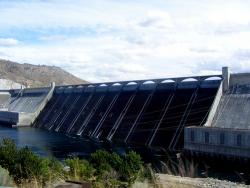
The massive Grand Coulee Dam, on the Columbia River, is the largest concrete structure in the U.S., the largest hydroelectric facility in the U.S., and the sixth-largest hydroelectric facility in the world. It provides irrigation for up to 1.1 million acres of agricultural lands and the hydroelectric complex maintains a generating capacity of 6.8 million kilowatts. It also serves as the primary flood control for the Columbia River basin (with a capacity of 5.18 million acre-feet of water) and provides recreational opportunities on the 150-mile-long Franklin D. Roosevelt Lake.
YearAdded:
Image Credit: Courtesy Flickr; //lucylu (CC BY-ND 2.0)Image Caption: Grand Coulee DamEra_date_from: 1941
1997
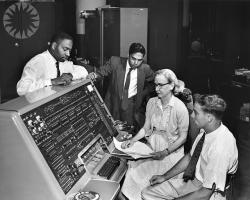
A curious child who dissembled the clocks in her parent's home, Grace Hopper graduated from Vassar College with a B.A. in mathematics and physics. She continued her education at Yale University by completing a masters and Ph.D. in mathematics. She then returned to Vassar to teach.
During World War II, Hopper joined the Navy and was sworn into the U.S. Naval Reserve in 1943. After training, she was commissioned as a lieutenant and assigned to the Bureau of Ordinance Computation Project at Harvard University. She became the third person to program the Harvard Mark I computer.
Innovations