
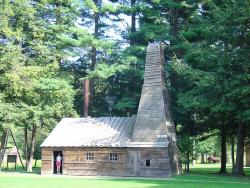
The drilling of this oil well marks the modern phase of the petroleum industry. A series of revolutionary technological changes, unforeseen even by the most prophetic, followed. Drake demonstrated practical oil recovery by applying salt-well drilling techniques, including the use of the derrick, and invented the modern method of driving iron pipe.
USA
YearAdded:
Image Credit: Courtesy Wikipedia/Zamoose (CC BY-SA 2.5)Image Caption: Drake Oil WellEra_date_from: 1859
2013
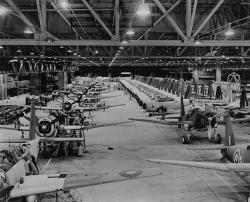
Established in 1929, and owned by several different aviation companies through its history, the Downey site was the design, test, and production site for various airplanes and spacecraft that defined American aerospace accomplishments in the 20th century.
YearAdded:
Image Caption: Production of the Vultee Vengeance bombers for the Royal Air Force at Downey, California, 1942Era_date_from: 1929
2010
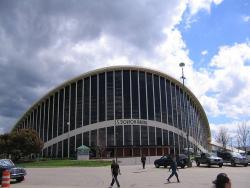
The Dorton Arena was the first use of a cable-supported roof system in the world. Commissioned in 1949 by North Carolina State Fair manager J.S. Dorton, the new building was intended to be a livestock judging pavilion. Architect Matthew Nowicki (1910 - 1950) proposed a structure that included a pair of intersecting parabolic arches supported by slender columns around its perimeter with a network of wire cables that supported the saddle-shaped roof.
YearAdded:
Image Credit: Courtesy Flickr/Justin Doub (CC BY 2.0)Image Caption: Dorton ArenaEra_date_from: 1952
2002
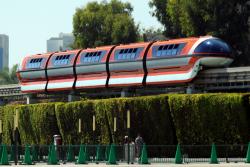
Disney engineers designed this monorail system based on the system developed by Axel Wenner-Gren of the Alweg Company in Cologne, West Germany. Wenner-Gren ran his experimental monorail in 1952 on a level track, and when adopted by Disney in 1959, it was designed to simulate the terrain typical of urban transit. Opening in 1959, the system has been in continuous operation as a passenger service carrying an average of 340,000 passengers a year and logging 10,000 miles. The original trains were replaced in 1969 and a new fleet introduced in 1987 to upgrade the existing chassis.
YearAdded:
Image Credit: Courtesy Flickr/prayitno (CC BY 2.0)Image Caption: Disneyland Monorail SystemEra_date_from: 1959
1986
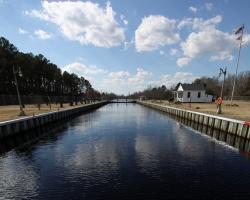
The Dismal Swamp Canal was created as a 22-mile waterway, extending from Deep Creek, Virginia to South Mills, North Carolina. The canal enabled North Carolina producers of building and agricultural products to deliver goods to the Port of Norfolk where they were transferred to ocean-going vessels.
YearAdded:
Image Credit: Photo by Edwin S. Grosvenor (CC BY 2.0)Image Caption: Dismal Swamp CanalEra_date_from: 1805
1987
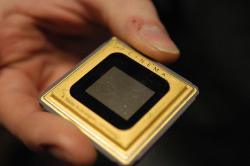
The Digital Micromirror Device (DMD) was recognized as an ASME Mechanical Engineering Historic Landmark in 2008. Its development began in 1977 with the forming of a small team at Texas Instruments headed by noted physicist Larry Hornbeck. Texas Instruments was given a project from the Department of Defense to create a device that could modulate light.
YearAdded:
Image Credit: Courtesy Wikipedia/Adpowers (CC BY-SA 1.0)Image Caption: Picture of DLP chip used in a digital projector at the Cinerama in SeattleEra_date_from: 1996
2008
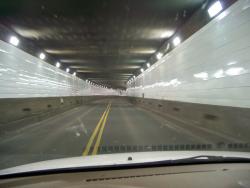
The Detroit-Windsor Tunnel is a 5,160-foot structure that carries traffic under the Detroit River between Detroit, Michigan and Ontario, Canada. Privately financed, built, and owned, it was completed in 26 months, 10 months ahead of schedule.
YearAdded:
Image Credit: Courtesy Flickr/Brian Rawson-Ketchum (CC BY-SA 2.0)Image Caption: Detroit-Windsor TunnelEra_date_from: 1930
1982
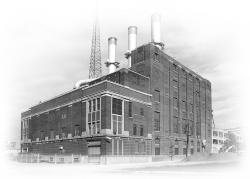
The concept of heating a number of buildings in the core area of a city from a single heating plant was introduced into the United States by Birdsill Holly at Lockport, New York, in 1877. The gain in thermal efficiency of a single large steam plant over a series of small isolated boilers led to widespread commercial installation of district heating. Organized by the Detroit Edison Company, the Central Heating Company began service here in 1903, supplying twelve customers with steam piped from the Edison Company's Willis Avenue Plant. Today's greatly enlarged system continues in operation.
YearAdded:
Image Credit: Courtesy ASMEImage Caption: Detroit Edison District Heating SystemEra_date_from: 1903
1985
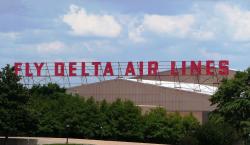
Delta Air Lines’ historic buildings consist of two aircraft hangers and several office buildings at the Delta World Headquarters site constructed between 1941 and 1947. On March 1, 1941, Delta Air Lines moved its corporate headquarters to Atlanta, constructing offices space and Hangar 1, the largest aircraft hangar in the Southeast United States at what was then Atlanta Municipal Airport. The airport was later renamed Hartsfield – Jackson International Airport in honor of Atlanta Mayors William B. Hartsfield and Maynard H. Jackson Jr.
YearAdded:
Image Credit: Courtesy Wikicommons/Mav (CC BY-SA 3.0)Image Caption: "Fly Delta Air Lines" markerEra_date_from: 1941
2011
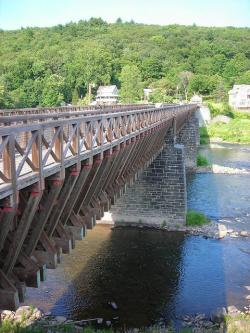
The Delaware Aqueduct provided an important transportation link between the Pennsylvania's coalmines and New York's booming industrial marketplace. It is the earliest surviving work of John A. Roebling, who designed the Brooklyn Bridge 30 years later. The cable anchorage system first used on this project was also used on the Brooklyn Bridge. The aqueduct is patterned after Roebling's design of the Pennsylvania Canal over the Allegheny River, and is the oldest metal strand cable suspension bridge still standing in the U.S.
YearAdded:
Image Credit: Courtesy Flickr/Doug Kerr (CC BY-SA 2.0)Image Caption: Delaware Aqueduct of the Delaware & Hudson CanalEra_date_from: 1848
1972
Innovations