
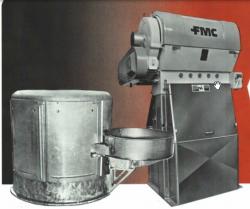
Squeezing an orange for juice is part of the concept of this machine, only on a much larger scale. The extractor revolutionized the juice industry. The twenty-four head rotary action simultaneously extracts juice from the interior of the fruit and citrus oil from the peel surface. The first unit was operated experimentally on grapefruit at the Sunkist Exchange plant in Tempe, Arizona, during late May of 1946. Tests on citrus fruits continued in California, Texas, and Florida.
USA
YearAdded:
Image Credit: Courtesy ASMEImage Caption: FMC Citrus Juice ExtractorEra_date_from: 1947
1983
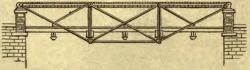
The Fink Deck Truss Bridge is thought to have been originally used on the Norfolk and Western mainline railway. It was moved to its present location and converted to a vehicular bridge over a railroad spur in 1893 when the Norfolk and Western mainline was moved. It was relocated again in 1985 to Lynchburg's Riverside Park to serve as a pedestrian bridge.
YearAdded:
Image Caption: Modified Fink trussed Girder bridgeEra_date_from: 1870
1979
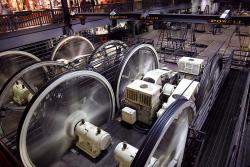
The F&CH Cable Railway, which opened in 1887, was designed and built by civil engineer Howard C. Holmes (1852-1921). The line is an amalgamation of the Powell Street Railway and the Park and Cliff House Railway. It was one of the most complicated cable-car systems to run from a single station and had been under construction two years prior to its opening.
Andrew Hallidie, a wire rope manufacturer, devised the first operating cable car in the United States in 1873, which ran on Clay Street hill.
YearAdded:
Image Credit: Courtesy Wikipedia/Caroline Culler (CC BY-SA 3.0)Image Caption: Ferries & Cliffhouse Cable Railway Power HouseEra_date_from: 1887
1973
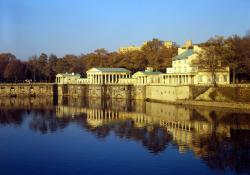
At a time when steam power was finding its first uses in America, Philadelphia opened two steam pumping stations, January 1801, to lift water from the Schuylkill River and distribute it through the city's wooden pipes and mains. By 1811 a new water power works was begun on the river near Morris Hill, and the Fairmount Water Works opened September 7, 1815. These water works represented the first large-scale application of steam pumping to water service in the country.
YearAdded:
Image Credit: Public Domain (National Park Service)Image Caption: Fairmount Waterworks, East bank of Schuylkill River, Aquarium Drive, Philadelphia, Philadelphia County, PA View looking northeast at waterworks from across Schuylkill River. Photo taken December, 1984.1977
Era_date_from: 1815
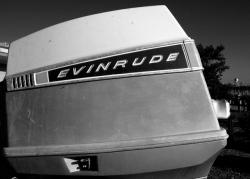
This outboard motor, designed and built by Ole Evinrude (1877-1934) at the Evinrude Motor Company in Milwaukee, Wisconsin, was quickly accepted by the boating public of the United States. Bess Evinrude called the prototype a "coffee grinder," but it moved a boat through water better than the huge steam- or foot-driven motors available in 1907. She encouraged him to build and sell ten, then twenty, soon resulting in the redirection of their automotive equipment business to outboard motors.
YearAdded:
Image Credit: Courtesy Flickr/Mr. T in DC (CC BY-ND 2.0)Image Caption: Evinrude Outboard MotorEra_date_from: 1909
1981
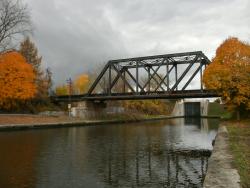
In its day, the famous Erie Canal was the world's longest canal and America's greatest engineering feat. It was the principal route for emigrants from the East and agricultural products from the West. Before construction of the canal, New York City was the nation's fifth largest seaport, behind Boston, Baltimore, Philadelphia and New Orleans. Within 15 years of its opening, New York was the busiest port in America, moving tonnages greater than Boston, Baltimore and New Orleans combined.
YearAdded:
Image Credit: Courtesy Flickr/Doug Kerr (CC BY-SA 2.0)Image Caption: Erie Canal - Waterford, NYEra_date_from: 1825
1967
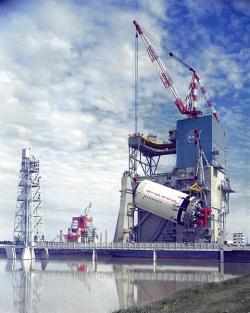
The Advanced Engine Test Facility was built in 1964, three years after President John F. Kennedy committed the United States to world leadership in aeronautical science. Conceived and designed by Wernher von Braun, the first director of the Marshall Space Flight Center, this facility was used to perform static tests on the booster of the Saturn V rocket, which launched Apollo 11 to the moon on July 16, 1969.
The stand has four concrete legs, each four feet thick and rising 144 feet to a steel superstructure supporting a 200-ton crane.
YearAdded:
Image Credit: Courtesy ASMEImage Caption: Saturn V Rocket being lifted onto the A-2 Test Stand at NASA's John C. Stennis Space CenterEra_date_from: 1964
1993
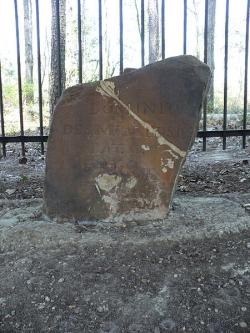
The stone was set by the joint U.S.-Spanish survey party on April 10, 1799. Made of sandstone, it is roughly two feet high and eight inches thick. On the north side of the stone is the inscription "U.S. Lat. 31, 1799." On the south side is "Dominio de S.M. Carlos IV, Lat. 31, 1799."
YearAdded:
Image Credit: Public Domain (Author's Choice)Image Caption: Ellicott's StoneEra_date_from: 1799
1968
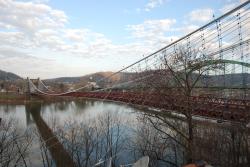
The Wheeling Suspension Bridge was the first bridge to span the Ohio River. It was initially completed in 1849, but destroyed by a tornado five years later. The bridge was rebuilt in 1856. The replacement bridge has the same general appearance of the original structure; the massive towers, anchorage housings, and island approach are all the original stone masonry.
YearAdded:
Image Credit: Photo by Edwin S. Grosvenor (CC BY 2.0)Image Caption: Wheeling Suspension BridgeEra_date_from: 1848
1968

One of the first major efforts to increase farming and encourage habitation in the arid regions of the western United States, the Rio Grande Project was designed to provide reliable irrigation as well as resolve a dispute over water supply with the Republic of Mexico. The project's centerpiece is Elephant Butte Dam, a concrete gravity structure 301 feet high and 1,674 feet wide. Elephant Butte Reservoir - with a surface area of 36,600 acres and a capacity of more than 2.2 million acre-feet - was the largest reservoir in the world at the time of its completion.
YearAdded:
Image Credit: Public Domain (United States Bureau of Reclamation)Image Caption: Elephant Butte Dam, 2016 (day before centenial celebration)Era_date_from: 1916
1976
Innovations